


Summary
What do huskies eat? A healthy Siberian Husky should eat complete and balanced dog food matched to its age, activity level, body condition, and health needs. Most Huskies thrive on digestible animal protein, suitable dietary fat, moderate carbohydrates, essential vitamins and minerals, and constant access to fresh water. Puppies require growth-focused food with controlled calcium and phosphorus, adults need measured portions that preserve lean muscle, and seniors may benefit from fewer calories and highly digestible nutrition.
Despite their athletic appearance, Huskies are often efficient eaters that require less food than owners expect. Feeding too much can cause weight gain, while feeding an active or working sled dog too little can reduce stamina and muscle condition. This guide explains what to feed a Husky, how much and how often to feed it, which fresh foods are safe, and what to do about picky eating or a sensitive stomach.
Table of Contents
- What Do Huskies Eat? The Direct Answer
- What Makes a Good Husky Diet?
- What Do Huskies Eat at Each Life Stage?
- How Much Should a Husky Eat?
- How Often Should Huskies Eat?
- Are Huskies Picky Eaters?
- Do Huskies Have Sensitive Stomachs?
- Safe Human Foods for Huskies
- Foods Huskies Should Not Eat
- Dry, Wet, Raw, and Home-Cooked Diets
- Feeding Active and Working Huskies
- How to Change a Husky’s Food
- Conclusion
- Frequently Asked Questions
What Do Huskies Eat? The Direct Answer
Siberian Huskies can eat dry dog food, wet dog food, fresh food, freeze-dried food, air-dried food, commercial raw food, or a professionally formulated home-cooked diet. The format matters less than whether the finished diet is safe, nutritionally complete, digestible, and suitable for the dog’s life stage.
A balanced Husky diet normally supplies:
- High-quality protein from meat, chicken, turkey, beef, lamb, duck, fish, salmon, or another tolerated animal source
- Essential amino acids for muscle development and tissue repair
- Dietary fat for concentrated energy and nutrient absorption
- Omega-3 and omega-6 fatty acids for skin, coat, brain, and joint health
- Digestible carbohydrates and fiber
- Correct proportions of calcium and phosphorus
- Vitamins, minerals, and antioxidants
- Adequate moisture and clean drinking water
Huskies may look like wolves, but pet Huskies should not be fed according to romantic ideas about a wild or whole-prey diet. A domestic Siberian Husky has different calorie needs, food-safety considerations, and living conditions from an Arctic working dog.
Owners should also distinguish real hunger from learned food behavior. Begging, counter-surfing, or becoming excited when the food bag opens does not prove that a Husky needs a larger serving. The Dog Behave resources on Dog Sense Guide can help owners understand how routines and reinforcement influence food-related behavior.
What Makes a Good Husky Diet?
When deciding what to feed a Husky dog, begin with nutritional adequacy rather than marketing language. Words such as “premium,” “ancestral,” “natural,” and “high meat” may sound attractive, but they do not guarantee balanced nutrition.
Complete and balanced nutrition
A Husky’s primary food should carry a nutritional adequacy statement for the correct life stage. The AAFCO guide to reading pet food labels explains that a complete food contains all required nutrients and a balanced food provides those nutrients in appropriate ratios.
For a puppy, look for food formulated for growth. Depending on the puppy’s expected adult size and a veterinarian’s advice, a medium- or large-breed puppy food may be appropriate. Healthy adult Huskies usually need food formulated for adult maintenance. Senior dog food should also be complete unless it is a therapeutic diet prescribed for a particular condition.
AAFCO establishes nutritional profiles and model standards, but it does not personally test or approve every food. Read the actual adequacy statement instead of relying on an “AAFCO approved” claim.
For more help evaluating formulas and ingredient lists, visit the broader Dog eats section.
High-quality, digestible protein
Protein helps maintain muscles, skin, hair, organs, enzymes, and immune function. Active Huskies benefit from highly digestible protein containing the essential amino acids required for muscle repair.
Common sources include:
- Chicken
- Turkey
- Beef
- Lamb
- Duck
- Salmon
- Sardines
- Other fish
- Egg
- Meat meal
- Organ meat
Heart, liver, kidney, and lung can provide valuable animal protein, vitamins, and minerals. However, organ meat should be part of a balanced formula rather than added freely. Too much liver, for example, can supply excessive vitamin A.
A food’s crude protein percentage is only one piece of information. Protein source, amino-acid balance, bioavailability, digestibility, total calories, and the individual dog’s tolerance also matter.
Huskies and Labradors are both energetic breeds, but their appetite and weight patterns can differ. Those comparing active-breed formulas may find the guide to the best dog food for labradors useful.
Appropriate dietary fat
Fat is a concentrated source of energy. It supports cells, nerves, muscles, vitamin absorption, coat quality, and palatability. It also provides more calories per gram than either protein or carbohydrates, so a small increase can substantially change the energy content of a meal.
Useful fat sources may include:
- Fish oil
- Salmon oil
- Flaxseed
- Canola oil
- Chicken fat
- Pork fat
- Sunflower oil
- Other appropriately processed vegetable oils
Omega-3 fatty acids can support normal inflammatory responses, skin health, coat quality, joints, and brain development. Omega-6 fatty acids also contribute to the skin barrier and healthy coat.
A high-fat diet may be appropriate for a working sled dog expending enormous amounts of energy. It is usually unnecessary for a pet Husky that takes a few daily walks. An inactive dog eating calorie-dense working food can gain weight quickly.
Moderate, digestible carbohydrates
Huskies do not require a carbohydrate-free diet. Properly cooked carbohydrates can provide accessible energy, fiber, and useful nutrients.
Possible carbohydrate sources include:
- Rice
- Brown rice
- Quinoa
- Sweet potato
- Potato
- Tapioca
- Peas
- Lentils
- Other legumes
- Grains
A moderate-carbohydrate diet may suit an average pet Husky, while a highly active dog may use more dietary energy. The appropriate balance depends on the complete formula rather than a single ingredient.
Grain-free food is not automatically healthier. Replacing rice or oats with peas, lentils, or potatoes does not remove carbohydrates. Unless a veterinarian has identified a medical reason to avoid a particular grain, a grain-inclusive diet can be a practical choice.
Vitamins, minerals, and antioxidants
Calcium and phosphorus support bone growth and maintenance. DHA supports puppy brain and vision development. Vitamins A, C, D, E, and K have different roles in vision, antioxidant protection, bone health, blood clotting, and immune function.
Minerals such as zinc, iodine, and iron are also important. Their benefits depend on proper amounts and ratios. Adding supplements to an already balanced diet can create a vitamin or mineral imbalance.
What Do Huskies Eat at Each Life Stage?
A Husky’s nutritional needs change with age. Puppy food, adult dog food, and senior dog food differ in calorie density and nutrient proportions. Additional life-stage comparisons are available in the Dogs Breed Foods collection.
What to feed a Siberian Husky puppy
A Husky puppy needs complete food formulated for growth. The recipe should contain digestible protein, suitable dietary fat, DHA, antioxidants, and carefully balanced calcium and phosphorus.
Puppies grow rapidly, but faster growth is not necessarily healthier. Excess calories may cause rapid weight gain and unnecessary stress on developing bones and joints. A puppy should grow steadily while remaining lean.
A suitable puppy diet supports:
- Muscle development
- Bone growth
- Joint development
- Brain development
- Vision development
- Immune function
- Digestive health
- Skin and coat health
Do not add calcium powder, cod liver oil, a general multivitamin, or a zinc supplement without veterinary guidance. Puppy formulas are designed around specific nutrient ratios, and random supplementation can disturb that balance.
When to switch to adult food
Many Huskies transition to adult food between approximately 12 and 18 months, but maturity varies. Some may remain on puppy food longer depending on growth, body condition, activity, and veterinary advice.
Do not switch simply because the puppy has reached its adult height. Skeletal development may continue after the dog looks nearly grown.
Use a gradual food transition when the time comes. Moving abruptly from puppy food to adult food can cause diarrhea, vomiting, flatulence, or refusal to eat.
What to feed an adult Husky
A healthy adult generally needs complete adult dog food with high-quality animal protein, appropriate fat, moderate carbohydrates, and controlled calories.
Most pet Huskies should be fed as athletic companion dogs, not endurance-racing dogs. A high-protein diet can support lean tissue, but the food’s calorie density must still match actual activity.
Two measured meals per day work well for most adults. Free feeding makes calorie intake harder to monitor and can encourage overeating in food-motivated dogs.
Like the Husky, the Doberman is an athletic dog that needs protein without uncontrolled calories. See Dog Food for Dobermans for another active-breed comparison.
What to feed a senior Husky
Senior Huskies may become less active and need a lower-calorie diet, but they still require digestible protein to preserve muscle. Senior food may also contain fiber, antioxidants, omega-3 fatty acids, and targeted joint-support nutrients.
Wet dog food or another moisture-rich food can help increase hydration and may be easier for a dog with dental disease. Appetite changes in an older dog should not automatically be blamed on age.
Ask a veterinarian to examine a senior Husky that:
- Loses weight unexpectedly
- Becomes unusually hungry
- Refuses meals
- Drinks or urinates more
- Develops constipation or diarrhea
- Has difficulty chewing
- Appears lethargic
- Loses muscle
- Develops poor coat condition
Small and long-backed breeds face different senior feeding challenges. The discussion in What Do Dachshunds Eat shows why food must be matched to the individual rather than selected by age alone.
How Much Should a Husky Eat?
How much Huskies eat depends on body weight, age, activity, metabolism, health, reproductive status, and the food’s caloric density. It cannot be determined accurately by breed alone.
Siberian Huskies are efficient eaters. Some maintain ideal condition on less food than similarly sized breeds, especially when they are not working in cold conditions.
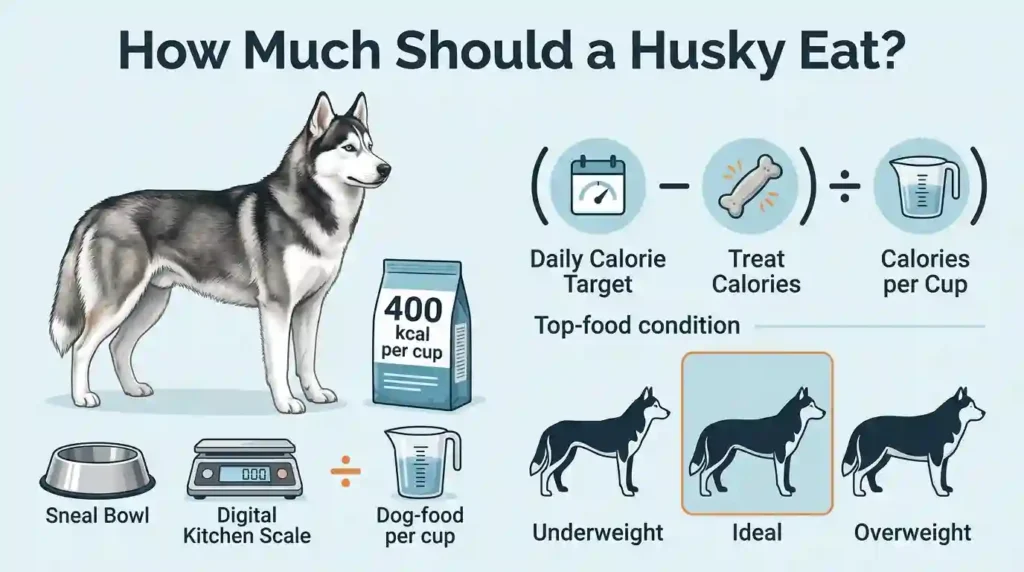
Start with calories, not cups
Locate the calorie statement on the food package. It may be listed as kilocalories per cup, can, kilogram, tray, or serving.
Then:
- Find the manufacturer’s starting recommendation for your dog’s weight and life stage.
- Determine how many calories the suggested serving provides.
- Include calories from treats, dental chews, peanut butter, meal toppers, and training rewards.
- Divide the remaining food into controlled meals.
- Monitor weight and body condition.
- Adjust the daily amount by about 5–10% when appropriate.
For example, assume a Husky needs 1,200 calories per day and its dry food contains 400 calories per cup:
1,200 ÷ 400 = 3 cups per day
If treats provide 120 calories, meals should provide approximately 1,080 calories:
1,080 ÷ 400 = 2.7 cups per day
This example is not a prescription. It demonstrates why two foods with different calorie densities cannot be portioned with the same measuring cup.
General adult starting ranges
The following calorie ranges are broad estimates for healthy adults. Individual requirements can fall outside them.
| Adult Husky profile | Approximate daily calories |
| 35 lb, less active | 800–1,000 |
| 35 lb, moderately active | 1,000–1,250 |
| 45–50 lb, less active | 950–1,200 |
| 45–50 lb, moderately active | 1,200–1,500 |
| 55–60 lb, less active | 1,100–1,350 |
| 55–60 lb, moderately active | 1,350–1,650 |
| Highly active or working Husky | Potentially much higher; calculate with a professional |
Climate, distance, speed, workload, and temperature dramatically affect a working dog’s needs. Do not use pet-dog estimates for endurance mushing.
How much should a Husky puppy eat?
Use the puppy food label as the starting point because puppy portions change rapidly with age and expected adult size. Divide the recommended daily amount across several meals.
Do not increase the portion simply because a puppy finishes quickly or searches for more food. Use growth monitoring and body condition instead.
A healthy puppy should generally have:
- Ribs that are easy to feel under a light covering
- A visible waist from above
- An abdominal tuck from the side
- Steady growth
- Normal stool
- Good energy
- Healthy skin and coat
The feeding principles used to keep a Golden Retriever lean during growth provide a useful comparison in What Golden Retrievers Eat.
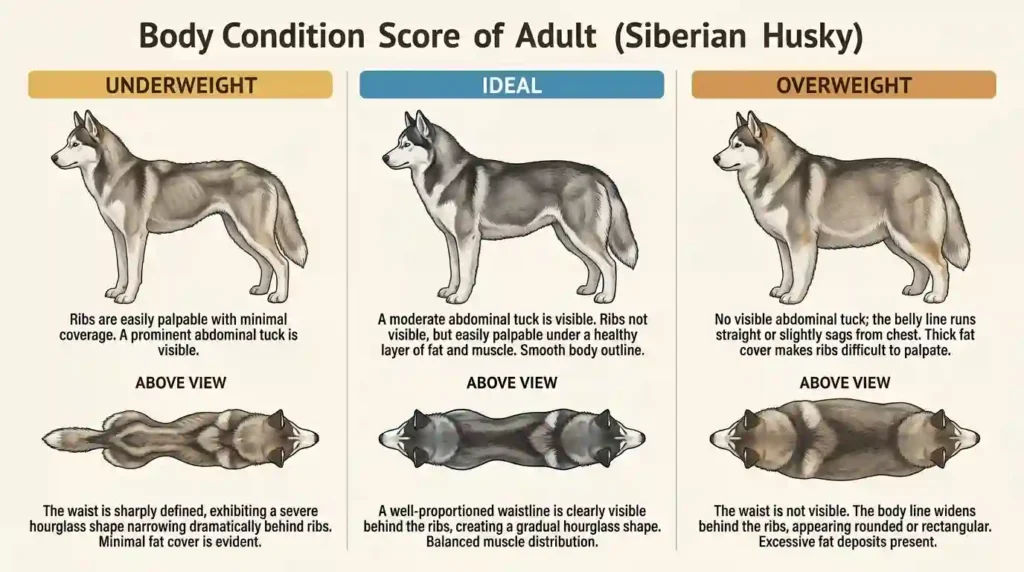
Use a body condition score
A body condition score is more valuable than appetite alone. At an ideal condition, the ribs should be easy to feel without being sharply visible, and the waist should be noticeable.
If the ribs become difficult to feel and the waist disappears, reduce calories modestly. If ribs, spine, or hip bones become prominent, increase food and consult a veterinarian if weight loss continues.
Obesity increases the risk of diabetes, high blood pressure, joint problems, reduced mobility, and pancreatitis. Weight-management food or a lower-calorie diet may help, but precise portion control remains necessary.
Weight control is also central to feeding muscular breeds; this guide to Dog Food for Pitbulls explains how excess calories can hide beneath an athletic outline.
How Often Should Huskies Eat?
Most adult Huskies should eat two meals per day. Dividing the daily portion can improve routine, make hunger easier to manage, and avoid placing the entire calorie load into one large meal.
A practical feeding schedule is:
| Age | Meals per day |
| 8–12 weeks | 4 |
| 3–6 months | 3 |
| 6–12 months | 2 |
| Adult | 2 |
| Senior | Usually 2, with adjustments if medically necessary |
Three to four puppy meals provide energy without requiring a young dog to consume a large amount at once. After approximately six months, many puppies can transition to two meals.
Avoid vigorous exercise immediately around a large meal. Allow the dog to settle before and after eating, particularly if it gulps food. Gastric bloat and torsion are emergencies involving abdominal enlargement, restlessness, unproductive retching, distress, or collapse.
A food-gulping Husky may benefit from a slow-feeder bowl, licking mat, or food puzzle. Supervise the first uses to make sure the dog does not chew or swallow pieces of the feeder.
Are Huskies Picky Eaters?
Some Huskies are picky eaters, although others are highly food-motivated. Apparent fussiness may result from their efficient metabolism, inconsistent feeding routines, excessive treats, frequent food rotation, stress, low activity, warm weather, or learned behavior.
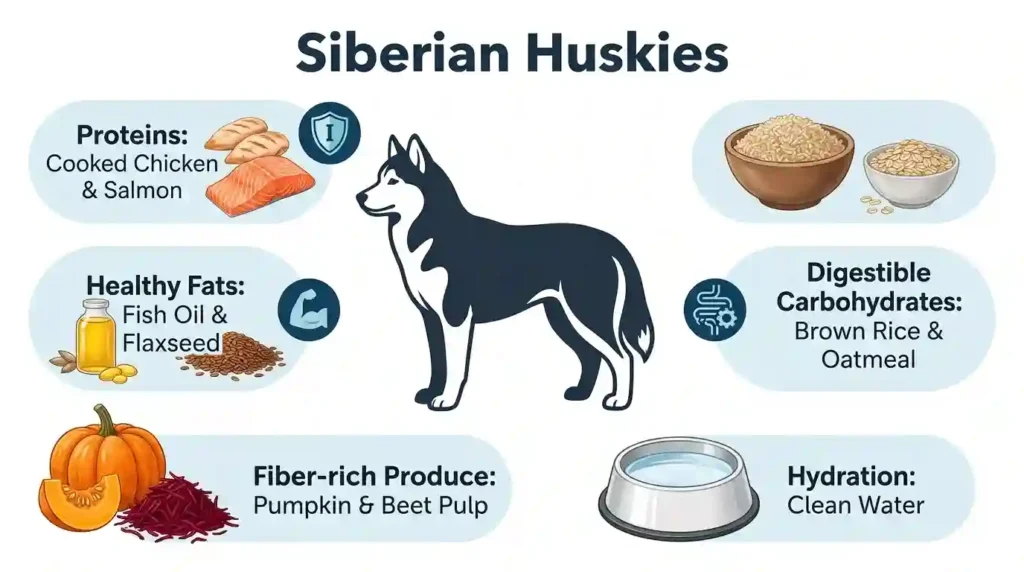
Owners can accidentally reinforce picky eating by replacing every refused meal with tastier food. The Husky learns that waiting produces chicken, cheese, wet food, or another high-value topper.
How to encourage consistent eating
Try these methods:
- Feed meals at predictable times.
- Offer the bowl for a limited period.
- Measure treats and meal toppers.
- Avoid changing food after every refused meal.
- Store food correctly to preserve freshness.
- Add a small amount of warm water to dry food.
- Warm wet food slightly to improve aroma.
- Provide daily exercise.
- Use calm, controlled meals.
- Track appetite changes.
A small amount of bone broth or wet food may improve palatability, but check the calories and ingredients. Broth should not contain onion, garlic, excessive sodium, or other unsafe additives.
Sudden appetite loss is different from habitual picky eating. Contact a veterinarian if refusal continues, especially when accompanied by vomiting, diarrhea, lethargy, pain, abdominal swelling, weight loss, or unusual thirst.
Beagles often present the opposite challenge because many are extremely food-driven. See What Do Beagles Eat for a comparison of appetite and portion management.
Do Huskies Have Sensitive Stomachs?
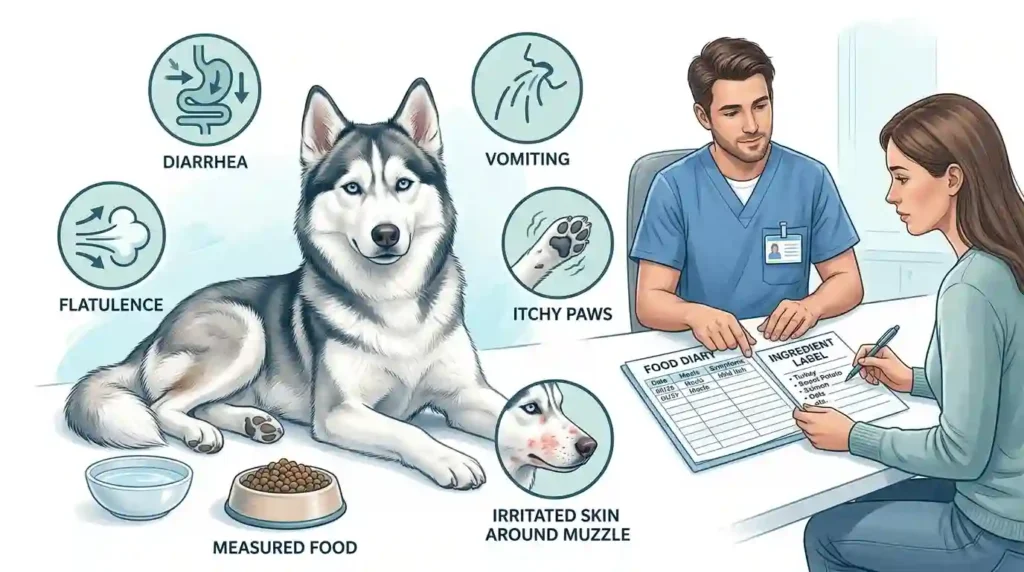
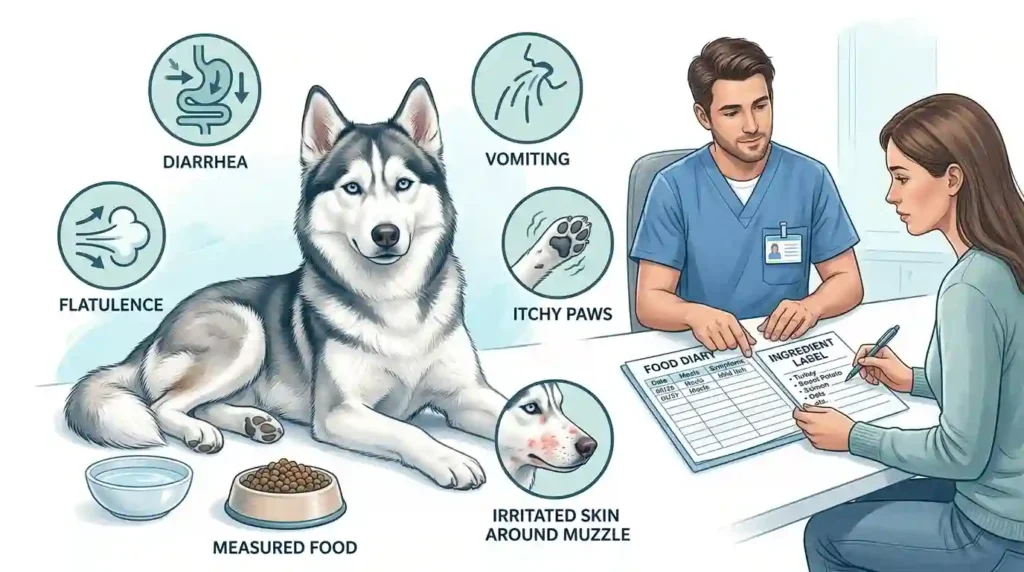
Some Huskies have sensitive digestive systems, but recurring digestive upset should not be accepted as normal. Diarrhea, vomiting, flatulence, gurgling, constipation, poor appetite, or inconsistent stool can have several causes.
Possible triggers include:
- A rapid food change
- Overfeeding
- Rich or fatty treats
- Food intolerance
- Food allergy
- Spoiled food
- Parasites
- Infection
- Pancreatic disease
- Excess dietary fat
- Poorly digestible ingredients
- Eating garbage
- Stress
Food sensitivity may also appear through itchy skin, itchy paws, hair loss, ear infections, skin irritation, chewing, or declining coat quality.
A veterinarian may recommend a digestible diet, moderate fat, a consistent protein, a novel protein diet, or a properly controlled elimination trial. A hypoallergenic diet should be used strategically—not chosen solely because “sensitive” appears on the package.
Many owners blame grains immediately, but chicken, beef, dairy, egg, or another protein may be involved. A grain-free diet is not a reliable test for food allergy.
German Shepherds are another breed frequently associated with digestive concerns. The Dog Food for German Shepherds guide offers additional context on digestibility and sensitive-stomach feeding.
Zinc-responsive dermatosis
Siberian Huskies can be predisposed to zinc-responsive dermatosis, a condition associated with difficulty absorbing or using zinc. Signs may include crusty skin, redness, scaling, irritation, and hair loss, particularly around the face, ears, elbows, or paw pads.
Do not diagnose the condition based on appearance alone. Other skin diseases can look similar, and excessive zinc supplementation may be harmful.
A veterinarian should confirm the diagnosis and determine whether a dietary adjustment, zinc supplement, zinc picolinate, or another chelated form is appropriate. The goal is adequate bioavailable zinc—not unrestricted supplementation.
When digestive symptoms require urgent care
Seek veterinary care promptly for:
- Blood in vomit or stool
- Repeated vomiting
- Severe or watery diarrhea
- Abdominal swelling
- Unproductive retching
- Collapse
- Difficulty breathing
- Suspected toxin ingestion
- Signs of dehydration
- Severe lethargy
- Inability to keep water down
What Can Huskies Eat as Fresh Food?
What do Huskies like to eat? Many enjoy meat, fish, eggs, vegetables, fruit, and high-value training treats. These can be offered in modest amounts if they are prepared safely.
Plain animal foods
Possible options include:
- Cooked, unseasoned chicken
- Cooked turkey
- Lean beef
- Lamb
- Duck
- Cooked salmon
- Sardines packed in water without excess salt
- Fully cooked egg
- Small amounts of appropriate organ meat
Remove cooked bones, excess skin, and visible fat. Avoid sauces, seasoning, onion, garlic, and heavy oils.
Tuna and swordfish can contain more mercury than smaller fish, so they should not become frequent meal components. Salmon and sardines are generally more practical omega-3 sources when correctly prepared.
Vegetables
Huskies can eat small quantities of vegetables such as:
- Broccoli
- Carrot
- Asparagus
- Bell pepper
- Green bean
- Sugar snap pea
- Sweet potato
- Plain pumpkin
Cut foods into safe pieces and serve them plain. Vegetables can provide fiber and variety, but they should not displace nutritionally complete food.
Fruit
Small pieces of suitable fruit may include:
- Banana
- Blueberry
- Apple with the seeds and core removed
- Blackberry
- Apricot flesh with the stone removed
Fruit contains natural sugar and calories, so use small servings. Portion size becomes especially important for small breeds, as discussed in What Do Chihuahuas Eat.
Treats
Treats should generally remain below 10% of daily calorie intake. Useful options include tiny pieces of freeze-dried meat, low-fat treats, low-calorie treats, safe vegetables, or part of the dog’s measured kibble.
Peanut butter can be calorie-dense and must never contain xylitol. Use only a thin smear in a toy or licking mat.
Dental chews also contain calories. Choose an appropriate size, supervise chewing, and subtract those calories from the daily allowance.
Foods Huskies Should Not Eat
Huskies should not eat foods known to be toxic or physically dangerous to dogs.
Avoid:
- Grapes
- Raisins
- Sultanas
- Chocolate
- Coffee
- Caffeine
- Xylitol
- Onion
- Garlic
- Macadamia nuts
- Human medication
- Cooked bones
- Alcohol
- Moldy or spoiled food
- Fruit pits and large stone-fruit seeds
Avocado flesh in tiny amounts is not the most dangerous item on this list, but the pit creates a choking and obstruction risk, and high-fat portions may cause digestive upset. It is safer to choose simpler treats.
Prunes and other dried fruits may contain excessive sugar, pits, or unsafe ingredients. Citrus fruit can also irritate some dogs’ stomachs and is unnecessary.
Cooked bones may splinter and cause choking, dental injury, or gastrointestinal damage. Raw bones also present risks, including fractured teeth, obstruction, choking, bacterial contamination, and nutritional imbalance. “Raw” does not automatically mean safe.
Because compact dogs can receive a large toxic dose from a small amount of food, safe storage is essential in every household. The warnings in What English Bulldogs Eat reinforce why human leftovers require caution across breeds.
Dry, Wet, Raw, and Home-Cooked Husky Diets
No food format is universally best. Choose according to nutritional adequacy, safety, tolerance, cost, storage, convenience, and veterinary needs.
Dry dog food
Dry food is convenient, economical, easy to store, and simple to measure. It can also be used for training or food puzzles.
Kibble does not automatically clean teeth. Ordinary dry food cannot replace tooth brushing, dental examinations, or professional care.
Check the calories per cup. High-protein or performance kibble may be extremely calorie-dense.
Wet dog food
Wet food provides more moisture and may appeal to picky eaters. It can be helpful for hydration or for dogs with dental discomfort.
When mixing wet food with kibble, calculate both calorie sources. Adding wet food without reducing dry food can lead to accidental overfeeding.
Freeze-dried and air-dried food
Freeze-dried and air-dried formulas are often highly palatable and concentrated. Their portions may look surprisingly small because much of the moisture has been removed.
Confirm that the product is complete and balanced rather than intended only as a topper. Follow storage and rehydration instructions carefully.
Commercial raw diet
A commercial raw diet may be sold fresh, frozen, ground, or freeze-dried. Some formulas contain muscle meat, organ meat, bone, fat, fruit, or vegetables.
Look for a complete formula made to recognized nutritional standards. A package of raw meat is not automatically complete dog food.
Raw products can carry harmful bacteria. Wash bowls and preparation surfaces, prevent cross-contamination, store the food correctly, and consider household members who may be particularly vulnerable to infection.
Home-prepared raw diet
A home-prepared raw or whole-prey diet is difficult to balance accurately. Common problems include inappropriate calcium and phosphorus, excessive liver, inadequate trace minerals, unsafe bones, and inconsistent calories.
Food gulping increases the risk of choking on large pieces. Dogs with poor dental health should not be expected to chew bones safely.
Consult a veterinary nutritionist or qualified canine nutrition specialist before feeding a homemade raw diet.
Home-cooked diet
Home-cooked food can help in selected medical or allergy cases, but chicken, rice, vegetables, and a general supplement do not form a complete recipe.
A professionally formulated home-cooked diet may require exact amounts of:
- Muscle meat
- Organ meat
- Carbohydrate
- Fat
- Fiber
- Calcium
- Vitamins
- Trace minerals
- Essential fatty acids
Follow the recipe precisely. Substituting beef for chicken, rice for potato, or one supplement for another can change the nutrient profile.
Feeding Active and Working Huskies
A working sled dog may use several times more energy than a household pet. Distance, speed, pulling load, temperature, terrain, recovery, and body condition influence daily calorie needs.
During hard training or cold-weather work, a canine nutrition professional may recommend:
- More calories
- Higher dietary fat
- Highly digestible protein
- Strategic hydration
- Food divided around work and recovery
- Close weight and performance monitoring
Winter feeding does not mean every pet Husky needs high-fat food as soon as the temperature drops. A dog sleeping indoors and taking normal walks does not have the energy expenditure of a working Arctic dog.
Food should support the workload while maintaining stable stool, lean muscle, hydration, appetite, and coat quality. Sudden loss of stamina, low energy, weight loss, or poor recovery deserves professional evaluation.
How to Change a Husky’s Food
A gradual food transition reduces the chance of digestive upset.
| Transition days | Current food | New food |
| Days 1–2 | 75% | 25% |
| Days 3–4 | 50% | 50% |
| Days 5–6 | 25% | 75% |
| Day 7 onward | 0% | 100% |
A sensitive Husky may need ten to fourteen days. Keep treats and toppers consistent during the change so you can identify the cause of any reaction.
Monitor:
- Stool consistency
- Vomiting
- Flatulence
- Appetite
- Energy
- Itching
- Ear condition
- Body weight
- Coat quality
If symptoms persist or become severe, consult a veterinarian instead of trying another rapid food rotation.

Conclusion
What Husky dogs eat should be determined by nutrition, activity, and body condition—not by their wolf-like appearance. Most Siberian Huskies thrive on complete and balanced food containing digestible animal protein, appropriate fat, moderate carbohydrates, essential vitamins and minerals, and sufficient moisture.
Puppies need growth-specific nutrition and several small meals. Adults usually do best with two controlled meals. Seniors may require fewer calories, additional moisture, and highly digestible food. Working Huskies need a professionally adjusted feeding plan that reflects their exceptional energy expenditure.
Measure portions, count treats, monitor body condition, introduce new food gradually, and investigate ongoing digestive or skin problems. The best food for a Husky is the one that safely keeps that individual dog lean, energetic, well-hydrated, and healthy.
Frequently Asked Questions
What do Siberian Huskies eat?
They should eat complete and balanced food appropriate for their age, activity, body condition, and health.
What is the best food for Husky dogs?
The best choice is a complete, digestible formula with quality animal protein, suitable fat, controlled calories, and proven tolerance.
How much should a Siberian Husky eat?
Use the food’s calorie content and feeding guide as a starting point, then adjust according to weight, activity, treats, and body condition.
How often should Huskies eat?
Most adults should eat twice daily. Young puppies generally need three to four smaller meals.
Are Huskies picky eaters?
Some are selective or efficient eaters. Consistent meal times, limited treats, exercise, and avoiding constant food changes can help.
Do Huskies have sensitive stomachs?
Some experience food intolerance or digestive sensitivity, but recurring diarrhea, vomiting, or flatulence should be assessed by a veterinarian.
Can Huskies eat chicken?
Yes, many can eat plain, fully cooked, boneless chicken. Avoid it if a veterinarian has identified a chicken allergy.
Can Huskies eat salmon?
Yes. Serve salmon fully cooked, unseasoned, and boneless, or choose complete dog food containing salmon.
Can Huskies eat rice?
Yes. Properly cooked rice is generally safe and is commonly used in grain-inclusive dog food.
Can Huskies eat eggs?
Yes. Fully cooked, plain egg can be an occasional addition when included within the daily calorie allowance.
Can Huskies eat raw meat?
Raw meat presents bacterial and nutritional risks. Use a complete commercial product or consult a veterinary nutritionist before raw feeding.
Should Huskies eat grain-free food?
Not automatically. A grain-free diet should be chosen for a specific reason discussed with a veterinarian.
What do Huskies like to eat?
Many enjoy meat, fish, eggs, wet food, freeze-dried meat, carrots, green beans, blueberries, and other safe treats.
When should a Husky switch to adult food?
Many switch between 12 and 18 months, but the correct timing depends on growth and veterinary guidance.
Why is my Husky not eating?
Warm weather, low activity, treats, stress, and picky behavior can affect appetite. Persistent or sudden refusal requires veterinary attention.