
Summary
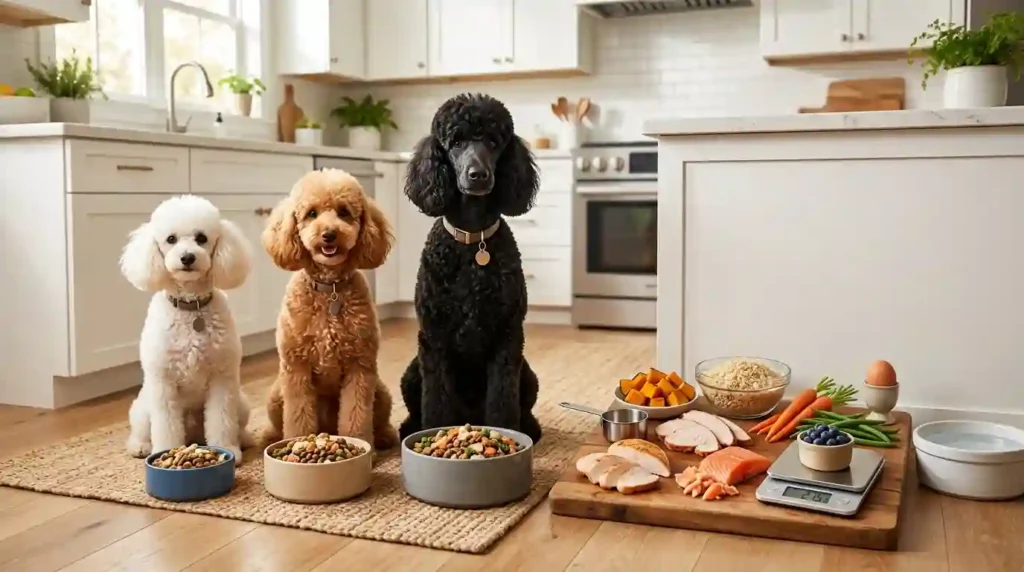
What do Poodles eat? Poodles should eat a complete and balanced diet made for their size, age, activity level, and health. The best Poodle diet normally contains high-quality animal protein, healthy fats, digestible carbohydrates, dietary fiber, vitamins, minerals, and fresh water. Toy and Miniature Poodles often benefit from small-breed dog food with manageable kibble, while an active Standard Poodle may need a larger-breed or active-dog formula.
Poodle puppies need calorie-rich puppy food for growth and brain development. Healthy adults usually need two measured meals daily, while seniors may benefit from an easier-to-chew senior dog food with joint and cognitive support. The exact serving depends on body weight, body condition score, metabolism, exercise, and the food’s calorie content.
This complete guide explains what to feed Poodles, how much each Poodle size may need, safe human foods, foods to avoid, sensitive stomachs, picky eating, feeding schedules, and common diet-related health concerns.
Table of Contents
- What Do Poodles Eat for Complete Nutrition?
- Understanding the Three Poodle Sizes
- What Do Poodles Eat at Each Life Stage?
- Best Types of Food for Poodles
- Essential Nutrients in a Poodle Diet
- How Much Should a Poodle Eat Daily?
- What Can Poodles Eat as Human Food?
- Do Poodles Have Sensitive Stomachs?
- Are Poodles Picky Eaters?
- Foods Poodles Should Never Eat
- Common Feeding Risks and Health Concerns
- How to Change Your Poodle’s Food
- Conclusion
- Frequently Asked Questions
What Do Poodles Eat for Complete Nutrition?
A healthy Poodle should eat food that supplies all essential nutrients in suitable proportions. The main meal should be a complete commercial dog food or a properly formulated fresh or home-cooked diet. Meat, rice, and vegetables may look healthy, but mixing them at home does not automatically produce balanced nutrition.
For dogs in the United States, check the package for a nutritional adequacy statement showing that the recipe meets the relevant AAFCO nutrient profiles. The Association of American Feed Control Officials’ guide to reading pet-food labels explains that a “complete” product contains all required nutrients, while “balanced” means those nutrients are provided in appropriate ratios.
A strong everyday Poodle diet should include:
- High-quality animal protein
- Moderate amounts of healthy fat
- Omega-3 and omega-6 fatty acids
- Digestible carbohydrates
- Dietary fiber and prebiotic fiber
- Essential vitamins and minerals
- Clean, fresh water
- Calories matched to the dog’s size and activity
Readers comparing foods across different breeds can find more general nutrition information in the Dog Food section. The basic nutrient groups remain similar, but Poodles need different portions and food formats according to whether they are Toy, Miniature, or Standard.
Look Beyond the Front of the Package
Terms such as “premium,” “natural,” and “holistic” can sound impressive, but they do not tell you whether a food meets your dog’s needs. Turn the package over and examine:
- The nutritional adequacy statement
- The ingredient list
- The guaranteed analysis
- Calorie content per cup or can
- Feeding guidelines
- Intended life stage
- Intended breed or size category
Ingredients are listed by weight before processing. A named animal protein such as chicken, turkey, beef, lamb, duck, rabbit, salmon, or whitefish can make the protein source easier to identify. However, the complete nutrient profile matters more than one attractive ingredient at the top of the list.
Meat meal and meat by-products are not automatically unsafe. Properly identified and carefully processed animal ingredients can supply protein, amino acids, minerals, and other nutrients. The better question is whether the manufacturer uses qualified nutrition experts, performs quality checks, provides clear feeding information, and produces a complete diet.
Understanding the Three Poodle Sizes
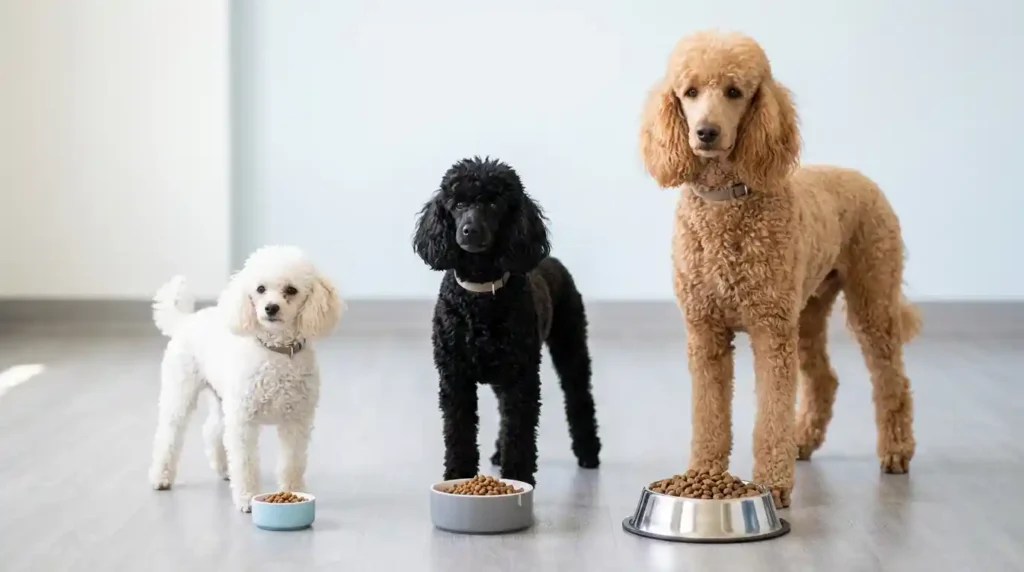
Poodles come in Toy, Miniature, and Standard sizes. Although they belong to the same breed, their food volume, calorie requirements, kibble needs, and health risks are not identical.
Toy Poodle
A Toy Poodle has a small mouth, small stomach, and relatively fast metabolism. Small-sized kibble or soft food can be easier to pick up and chew. Toy puppies also need small, frequent meals because long gaps without food may increase the risk of hypoglycemia.
A Toy Poodle can gain weight on only a few extra calories. Treats, table scraps, dental chews, and food toppers must be counted as part of the daily calorie intake.
These needs resemble some of the feeding challenges explained in What Do Chihuahuas Eat and What Do Pomeranians Eat. Each dog still requires an individual plan.
Miniature Poodle
A Miniature Poodle is larger than a Toy but smaller than a Standard. It is an intelligent, athletic dog that needs enough protein and calories to support healthy muscle tone without encouraging weight gain.
Miniature Poodles may benefit from a small- or medium-breed formula, depending on the dog’s size and ability to chew. Some have sensitive digestion, skin sensitivity, or food allergies, so ingredient tolerance matters.
Standard Poodle
A Standard Poodle is a medium-to-large athletic dog. It may need large-breed dog food or an active-dog formula, especially if it participates in running, swimming, hunting, agility, or other demanding activities.
Standard Poodle puppies require carefully controlled growth nutrition. Their calcium and phosphorus intake should come from a complete puppy formula rather than separate supplements. This principle also matters when choosing Dog Food for German Shepherds, since rapid growth and skeletal development deserve special attention in larger puppies.
Standard Poodles are deep-chested and can be vulnerable to bloat and gastric dilatation-volvulus. Feeding two or more smaller meals, discouraging rapid eating, and limiting hard exercise around mealtimes may help reduce avoidable risk.
What Do Poodles Eat at Each Life Stage?
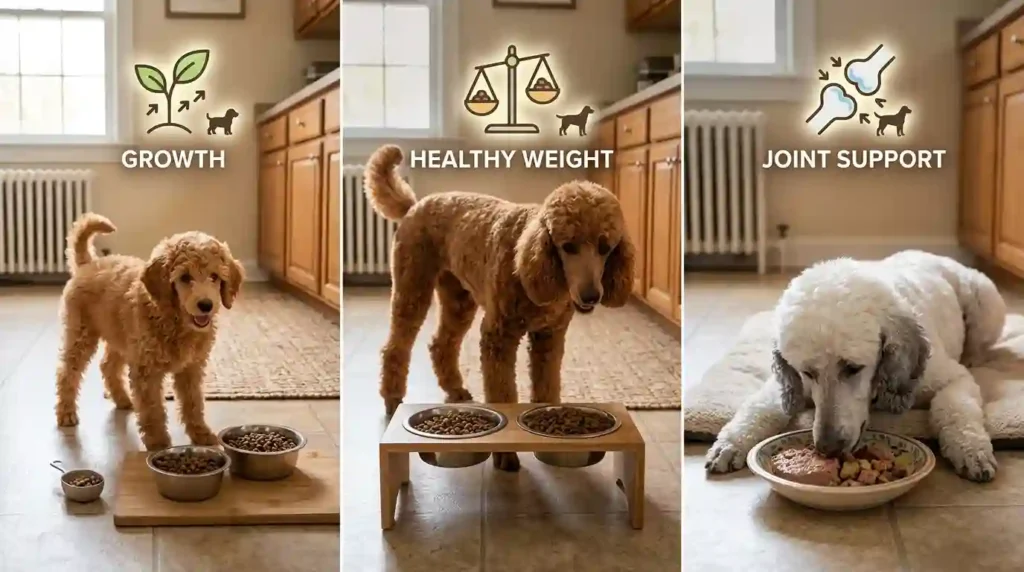
Life stage is one of the most important factors when deciding what to feed Poodles. Puppies, adults, and seniors require different amounts and ratios of nutrients.
Poodle Puppy Food
A Poodle puppy should eat puppy food formulated for growth or an all-life-stages food that is suitable for its expected adult size. Puppy formulas normally provide more calories and specific nutrients for muscle development, bone health, brain development, and immune support.
Important puppy nutrients include:
- High-quality protein
- Essential amino acids
- DHA for brain and eye development
- Healthy fats for energy
- Calcium and phosphorus in controlled proportions
- Antioxidants
- Vitamin A, vitamin C, vitamin D, and vitamin E
- Zinc, biotin, and other trace minerals
Toy Poodle puppies commonly need three or four small meals daily. Miniature puppies generally do well with three meals, while Standard Poodle puppies may also receive three measured meals during early growth.
Do not add calcium, phosphorus, multivitamins, or joint supplements to a complete puppy food without veterinary guidance. Extra nutrients can disturb the balance already created by the manufacturer.
Adult Poodle Food
Most Poodles transition to adult dog food at approximately one year, although a Standard Poodle may remain on an appropriate growth formula slightly longer. Your veterinarian can recommend the best transition time based on growth and body condition.
An adult Poodle normally needs two measured meals per day. A Toy or Miniature Poodle may be more comfortable with three smaller meals if it has a sensitive stomach.
Adult food should maintain:
- Lean muscle
- Stable energy
- Ideal weight
- Healthy skin
- Continuous coat growth
- Digestive health
- Dental health
- Joint function
Protein is important for Poodles because they are active and naturally lean. However, the protein percentage alone does not prove that a food is better. Digestibility, amino-acid balance, calorie content, and the complete formula matter too. For a comparison with another muscular breed, see the guide to Dog Food for Pitbulls.
Senior Poodle Food
Senior Poodles may become less active and need fewer calories, but they still require adequate protein to limit age-related muscle loss. A senior formula may contain omega-3 fatty acids, antioxidants, prebiotics, glucosamine, chondroitin, L-carnitine, or other ingredients intended to support healthy aging.
Older Poodles may benefit from:
- Digestible protein
- Moderate calorie levels
- Softer or smaller food pieces
- High moisture content
- Joint support
- Cognitive support
- Digestive support
- Controlled mineral levels when medically necessary
Dental pain, missing teeth, reduced appetite, arthritis, kidney disease, liver disease, or another health problem can change what a senior should eat. A veterinary diet may be needed when a medical condition is diagnosed.
Large and active breeds often share joint and weight concerns. The discussion of What Golden Retrievers Eat offers a useful comparison, although serving sizes are different.
Best Types of Food for Poodles
No single food format is best for every Poodle. Dry, wet, fresh, mixed, home-cooked, and raw diets can have different advantages and risks.
Dry Kibble
Dry kibble is convenient, easy to store, and simple to measure. Toy and Miniature Poodles may need small-sized kibble, while Standard Poodles can manage larger pieces.
Benefits of dry food include:
- Easy portion control
- Longer storage after opening
- Lower cost than many fresh diets
- Less mess
- Wide availability
- Options for puppies, adults, seniors, and medical needs
Dry food does not replace dental cleaning. It may provide some chewing action, but plaque and tartar can still build up. A dental-focused diet may help certain dogs, but tooth brushing and veterinary dental examinations remain important.
Similar mouth-size and dental considerations apply when choosing What Do Maltese Dogs Eat.
Wet Dog Food
Wet dog food has a high moisture content and is often appealing to picky eaters. It can be easier to chew for seniors, Toy Poodles with dental disease, or dogs recovering from illness.
Possible advantages include:
- Added hydration
- Soft texture
- Stronger aroma
- Easier chewing
- Good taste for dogs with reduced appetite
Check whether the product is complete and balanced. Some canned foods, toppers, and broths are meant only for supplementary feeding.
Mixed Diet
A mixed diet combines wet and dry food. It can add flavor and moisture while keeping the convenience of kibble. The main risk is accidental overfeeding.
Do not provide the complete dry-food allowance and then add a complete wet-food serving. Calculate the calories from both products and reduce each portion so the total remains appropriate.
Fresh and Gently Cooked Food
Fresh food made with human-grade ingredients can be easy to recognize and appealing to selective Poodles. Gently cooked food may contain real meat, rice, whole grains, vegetables, and healthy oils.
Human-grade ingredients do not guarantee nutritional completeness. Confirm that the final recipe meets the nutritional requirements for the dog’s life stage.
Home-Cooked Diet
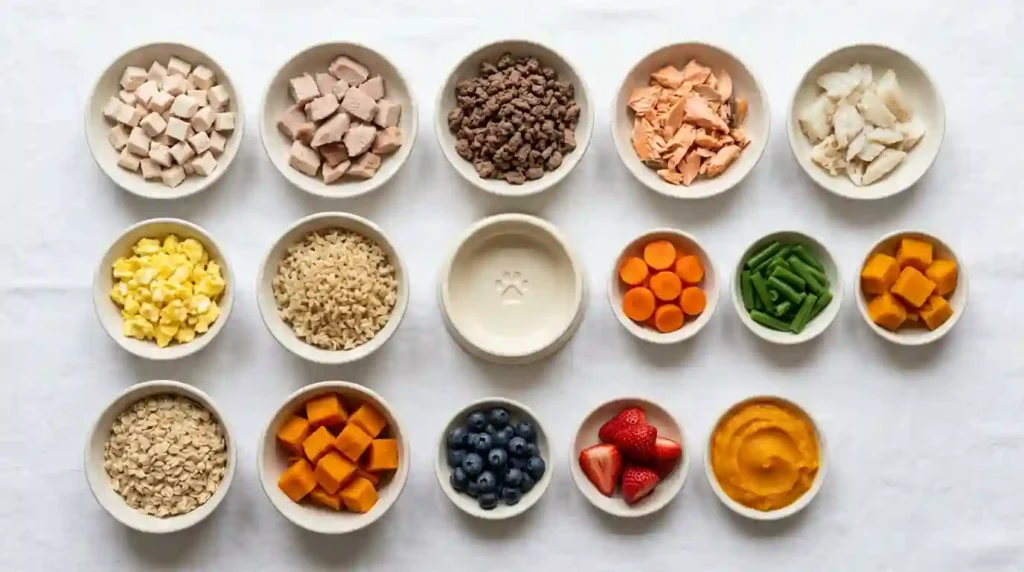
A home-cooked diet may include lean protein, vegetables, wholesome grains, and added oils. Common ingredients include chicken, turkey, beef, lamb, fish, eggs, brown rice, oatmeal, quinoa, carrots, pumpkin, green beans, zucchini, and sweet potato.
The difficulty is balancing amino acids, calcium, phosphorus, vitamins, minerals, fatty acids, and calories. A bowl of meat and vegetables can still cause nutritional deficiencies.
Ask a board-certified veterinary nutritionist or qualified clinical dog nutritionist to formulate the recipe. Follow it exactly rather than changing ingredients or supplements without approval.
Raw Food Diet
A raw food diet, sometimes called a BARF diet, may contain uncooked meat, organs, bones, fruit, and vegetables. Some owners prefer its limited processing, but raw feeding has serious considerations:
- Bacterial contamination
- Parasite exposure
- Choking
- Broken teeth
- Intestinal blockage
- Nutrient imbalance
- Risks to children, seniors, and immunocompromised people
A raw diet should not be improvised. Speak with a veterinarian or veterinary nutritionist before making the change.
Grain-Free Diet
Poodles do not automatically need grain-free food. Rice, barley, oatmeal, quinoa, and other grains can provide digestible carbohydrates and fiber.
Some dogs need an elimination diet because of a confirmed food allergy, but removing every grain without evidence may unnecessarily limit food choices. Certain grain-free recipes containing large amounts of peas, lentils, legumes, or potatoes have also been examined in relation to diet-associated dilated cardiomyopathy and the so-called BEG diet—boutique brands, exotic meat, and grain-free formulations.
This issue deserves extra care in breeds with known heart concerns. For comparison, read about Dog Food for Dobermans. Never change a medically necessary diet without speaking to your veterinarian.
Essential Nutrients in a Poodle Diet
High-Quality Animal Protein
Protein supports muscle maintenance, tissue repair, immune function, enzymes, hormones, skin, and continuous hair growth. Suitable named animal proteins may include:
- Chicken
- Turkey
- Beef
- Lamb
- Duck
- Rabbit
- Fish
- Salmon
- Whitefish
- Haddock
- Cod
- Flounder
- Veal
- Eggs
Some dogs tolerate one protein better than another. A novel protein such as rabbit, duck, or selected fish may be used in a limited-ingredient diet, but it is only “novel” if the dog has not eaten it previously.
Healthy Fats
Fat supplies concentrated energy and helps absorb vitamins A, D, E, and K. Sources may include chicken fat, fish oil, salmon oil, flaxseed, and controlled amounts of olive oil in professionally formulated homemade recipes.
Omega-3 and omega-6 fatty acids help support:
- Skin health
- Coat health
- Brain function
- Joint health
- Heart health
- Normal inflammatory responses
DHA and EPA are valuable omega-3 fatty acids commonly obtained from marine sources. Do not add fish oil without calculating the correct amount, as excessive fat may cause digestive upset or create problems for dogs prone to pancreatitis.
Carbohydrates and Fiber
Carbohydrates can provide energy, while fiber supports stool quality and the gut microbiome. Useful sources may include:
- Oatmeal
- Quinoa
- Rice
- Brown rice
- Barley
- Sweet potato
- Potato
- Pumpkin
- Peas
- Green beans
- Lima beans
- Carrots
- Spinach
- Zucchini
Poodles do not need food that is packed with refined carbohydrates or unnecessary fillers. However, corn, soy, and wheat are not automatically toxic. They should be assessed according to nutritional purpose, digestibility, formulation quality, and the individual dog’s tolerance.
Antioxidants, Prebiotics, and Probiotics
Antioxidants such as vitamins C and E help protect cells from oxidative stress. Blueberries, cranberries, strawberries, raspberries, apples, and pears contain natural antioxidants, although fruit should be offered in small amounts.
Prebiotic fiber supports beneficial intestinal bacteria. Probiotics contain selected microorganisms that may support digestion and stool consistency. Dogs with ongoing diarrhea, vomiting, or gas should receive a veterinary examination rather than relying only on supplements.
Joint-Supporting Nutrients
Glucosamine and chondroitin are often included in senior or joint-support formulas. Omega-3 fatty acids may also support normal joint function.
These nutrients can be relevant to Standard Poodles with hip dysplasia or arthritis and Toy or Miniature Poodles affected by patellar luxation. Supplements do not replace weight management, appropriate exercise, pain treatment, or veterinary care.
How Much Should a Poodle Eat Daily?
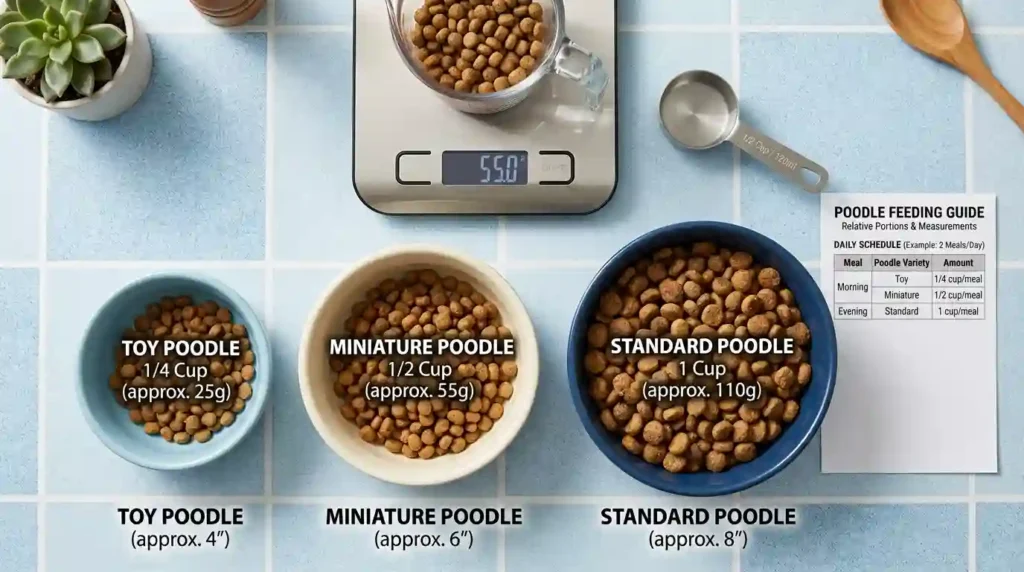
The correct amount depends on the dog’s weight, age, neuter status, metabolism, activity, body condition score, and food calorie density. Cup measurements cannot be transferred directly from one food to another because recipes contain different calories per cup.
Approximate Adult Calorie Ranges
| Poodle size | Typical adult weight range | Broad daily calorie starting range |
| Toy Poodle | 4–10 pounds | 180–350 calories |
| Miniature Poodle | 10–20 pounds | 300–600 calories |
| Standard Poodle | 40–70 pounds | 850–1,500 calories |
These are broad starting estimates for healthy adults. Highly active dogs may need more, while senior, neutered, or less-active dogs may need less. Your veterinarian can calculate a more suitable target.
How Much Should a Toy Poodle Eat Daily?
A healthy adult Toy Poodle may eat approximately one-quarter to three-quarters of a cup daily, but only if that amount matches the food’s calorie content. A calorie-dense food requires a smaller portion than a lower-calorie formula.
Use this calculation:
Daily cups = daily calorie requirement ÷ calories per cup
If a Toy Poodle needs 250 calories and the food supplies 400 calories per cup:
250 ÷ 400 = 0.625 cup daily
That daily amount can be divided into two or three meals.
Miniature Poodle Portions
A healthy adult Miniature Poodle may need approximately 300–600 calories per day. The exact portion can range widely because a 10-pound Miniature Poodle and a 20-pound dog do not have the same energy needs.
Measure the food rather than estimating with a random scoop. Weight gain can happen slowly and may be difficult to notice beneath the curly coat.
Standard Poodle Portions
A healthy Standard Poodle may need approximately 850–1,500 calories daily. A dog that competes in agility, runs regularly, swims, or works in the field may need an active-dog formula with greater calorie density.
This activity-related difference is also important when researching Dog Food for Huskies or the best dog food for Labradors. Breed guides provide useful starting points, but individual exercise levels determine the final amount.
Feeding Frequency by Age and Size
| Poodle stage | Suggested meals per day |
| Toy puppy under 6 months | 3–4 |
| Miniature puppy | 3 |
| Standard puppy | 3 |
| Healthy adult Poodle | 2 |
| Toy adult with a small stomach | 2–3 |
| Senior Poodle | 2 or more smaller meals |
Follow the 90/10 Rule
At least 90% of daily calories should come from complete and balanced food. Training treats, table scraps, chews, and food toppers should stay within the remaining 10%.
Poodles learn quickly, so training can create a hidden calorie problem. Break treats into very small pieces or reserve part of the daily kibble allowance for rewards.
Portion control is also central when answering What Do Beagles Eat and What Do Dachshunds Eat, as extra weight can worsen breed-related health concerns.
What Can Poodles Eat as Human Food?
Poodles can eat some plain human foods as occasional treats. These foods should remain within the 10% treat allowance and must not replace complete dog food.
Safe Protein Options
Poodles may eat small amounts of fully cooked, unseasoned:
- Chicken
- Turkey
- Lean beef
- Lamb
- Duck
- Rabbit
- Salmon
- Whitefish
- Haddock
- Cod
- Flounder
- Veal
- Eggs
Remove bones, excess fat, sauces, seasoning, onion, and garlic. Introduce only one new food at a time.
Safe Vegetables and Grains
Small portions of the following may be suitable:
- Plain pumpkin
- Carrots
- Green beans
- Peas
- Spinach
- Zucchini
- Sweet potato
- Plain potato
- Brown rice
- Oatmeal
- Quinoa
- Barley
Cook firm vegetables until soft and cut them into manageable pieces to reduce choking risk.
Safe Fruits
Poodles may have small amounts of:
- Blueberries
- Cranberries
- Strawberries
- Raspberries
- Apple without seeds or core
- Pear without seeds or core
Fruit contains natural sugar, so a Toy Poodle may need only one or two tiny pieces.
Do Poodles Have Sensitive Stomachs?
Some Poodles have sensitive stomachs, but digestive problems should not automatically be blamed on the breed. Food changes, overeating, table scraps, high-fat food, stress, parasites, infection, food sensitivity, or a medical condition may cause diarrhea, gas, vomiting, or reduced appetite.
Possible signs of digestive sensitivity include:
- Loose stool
- Frequent gas
- Vomiting after meals
- Abdominal discomfort
- Refusing food
- Inconsistent appetite
- Stool changes after new treats
- Reactions to specific ingredients
A consistent feeding schedule and gradual food transition can help. Wet food, gently cooked food, or a highly digestible veterinary diet may be useful for some dogs, but the best choice depends on the cause.
Skin problems can also be linked to food or environmental allergies. Signs may include itching, redness, ear infections, paw licking, and chronic irritation. Similar sensitivity concerns occur in other breeds, including those discussed in What English Bulldogs Eat.
A veterinarian may recommend an elimination diet or limited-ingredient diet. Do not keep switching between chicken, beef, lamb, and fish every few days. Frequent changes make it more difficult to identify the real trigger.
Are Poodles Picky Eaters?
Some Poodles are selective about food, but picky eating is often learned. An intelligent dog may discover that refusing kibble results in chicken, cheese, wet food, or another preferred option.
To manage ordinary picky eating:
- Offer meals at consistent times.
- Measure the correct portion.
- Leave the meal available for about 15–20 minutes.
- Remove uneaten food until the next scheduled meal.
- Limit table scraps and random snacks.
- Avoid changing the food after every refusal.
- Use a small amount of warm water to improve aroma when appropriate.
- Keep treats within the daily calorie allowance.
Sudden pickiness is different from an established preference. Dental pain, nausea, digestive illness, stress, or another condition may cause reduced appetite. Contact a veterinarian if a Poodle suddenly refuses food, loses weight, vomits, develops diarrhea, or appears weak.
Feeding habits often connect with training and Dog Behavior. Consistency helps prevent begging, food refusal, and attention-seeking routines from controlling mealtimes.
Foods Poodles Should Never Eat
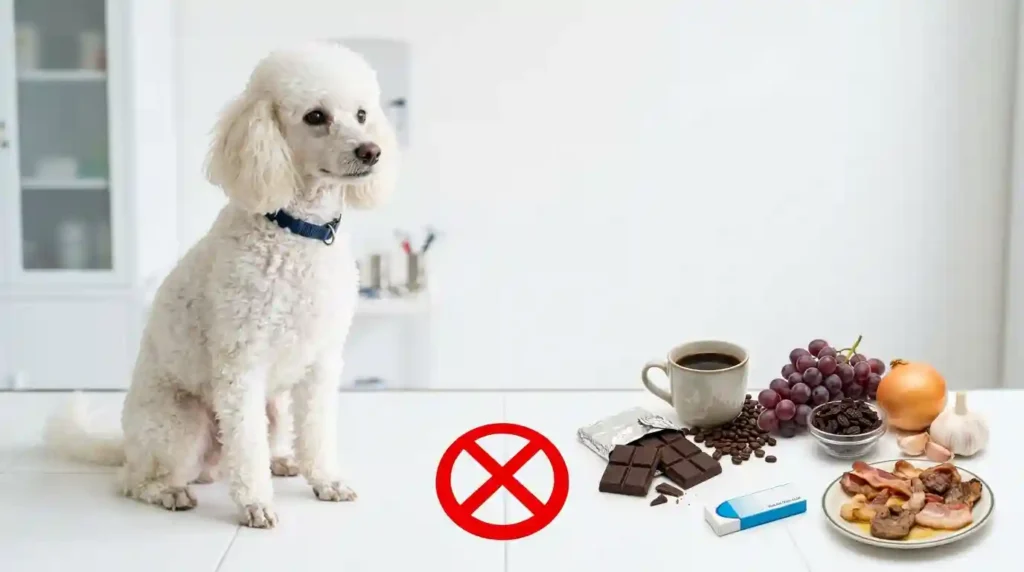
Some human foods are toxic or dangerous to dogs. Keep the following away from every Poodle:
- Chocolate
- Caffeine
- Grapes
- Raisins
- Onions
- Garlic
- Xylitol
- Excessively high-fat food
Chocolate and caffeine contain harmful stimulants, including theobromine. Grapes and raisins can cause kidney failure. Onions and garlic can damage red blood cells and contribute to anemia.
Xylitol is a sugar substitute found in some sugar-free candy, baked products, toothpaste, chewing gum, medications, and peanut butter. It can cause severe hypoglycemia and liver failure.
High-fat leftovers may cause vomiting, diarrhea, obesity, or pancreatitis. If your Poodle eats a toxic food, contact a veterinarian or animal poison service immediately. Do not wait for symptoms or induce vomiting unless a veterinary professional tells you to do so.
Common Feeding Risks and Health Concerns
Obesity and Weight Gain
Overfeeding is a major problem, especially in Toy and Miniature Poodles. A few extra treats can represent a large percentage of a small dog’s daily calories.
Check body condition regularly. You should be able to feel the ribs under a light layer of fat, and the dog should have a visible waist when viewed from above.
Hypoglycemia in Toy Puppies
Toy Poodle puppies can develop low blood sugar if they go too long without eating, become ill, or use more energy than they can replace.
Warning signs may include weakness, trembling, poor coordination, confusion, unusual sleepiness, collapse, or seizures. This is an emergency requiring prompt veterinary help.
Dental Disease
Small Poodles can develop crowded teeth, plaque, tartar buildup, gum disease, and dental pain. A dog with mouth pain may drop kibble, chew on one side, refuse hard food, or develop bad breath.
Small kibble or wet food may improve comfort, but it does not treat dental disease. Arrange a veterinary dental examination when eating habits change.
Bloat and Gastric Dilatation-Volvulus
Standard Poodles have a deep chest and may develop bloat or gastric dilatation-volvulus. GDV occurs when the stomach expands and twists, creating a life-threatening emergency.
Risk-reduction habits include:
- Feeding two or more smaller meals
- Using a slow-feeder bowl for rapid eating
- Avoiding one very large meal
- Restricting hard exercise around mealtimes
- Avoiding elevated food bowls unless medically recommended
- Discussing preventive gastropexy with a veterinarian
A swollen abdomen, repeated unproductive retching, excessive drooling, restlessness, weakness, or collapse requires emergency veterinary treatment.
Joint Problems
Hip dysplasia and arthritis are important concerns for Standard Poodles, while patellar luxation can affect smaller Poodles. Maintaining an ideal weight reduces unnecessary pressure on joints.
Glucosamine, chondroitin, fish oil, or a veterinary joint supplement may be recommended, but supplements should not replace diagnosis and treatment.
Tracheal Collapse
Toy Poodles may be vulnerable to tracheal collapse. Keeping the dog at a healthy weight can reduce strain. A veterinarian should examine coughing, breathing difficulty, or symptoms that worsen during eating or excitement.
How to Change Your Poodle’s Food Safely
Changing food too quickly can cause digestive upset. Unless your veterinarian recommends a different method, use a gradual transition over seven to ten days.
| Transition period | Current food | New food |
| Days 1–2 | 75% | 25% |
| Days 3–4 | 50% | 50% |
| Days 5–6 | 25% | 75% |
| Day 7 onward | 0% | 100% |
A Poodle with a sensitive stomach may need a slower change. Watch stool quality, appetite, skin, coat, and energy during the transition.
Stop the transition and contact a veterinarian if the dog develops persistent vomiting, severe diarrhea, facial swelling, breathing trouble, extreme weakness, or collapse.
Conclusion
So, what do Poodles eat for a healthy life? They need complete and balanced food selected according to their size, age, activity, and medical needs. A good formula supplies high-quality animal protein, healthy fats, digestible carbohydrates, dietary fiber, vitamins, minerals, and fresh water.
Toy and Miniature Poodles often benefit from small-breed food with smaller kibble. Standard Poodles may need a large-breed or active-dog formula with calories matched to their athletic lifestyle. Puppies need growth nutrition, adults need measured maintenance meals, and seniors may require lower calories with added digestive, joint, or cognitive support.
Safe human foods can be offered in tiny portions, but they should remain within the 10% treat allowance. Avoid toxic foods, control portions, monitor body condition, and make every food change gradually.
For more comparisons covering different sizes, activity levels, and breed-related needs, explore the Dogs Breeds Feeding collection.
Frequently Asked Questions
What can Poodles eat every day?
Poodles should eat complete and balanced dog food made for their size, age, and activity level.
What can Toy Poodles eat?
Toy Poodles can eat small-breed kibble, complete wet food, or balanced fresh food, plus tiny amounts of safe treats.
How much should a Toy Poodle eat daily?
Many adults need roughly 180–350 calories daily, but weight, activity, metabolism, and food calorie density determine the exact amount.
How often should a Toy Poodle eat?
Healthy adults usually eat two or three meals daily. Toy Poodle puppies generally need three or four small meals.
Do Poodles have sensitive stomachs?
Some do, but diarrhea, gas, or vomiting may also result from sudden food changes, overeating, stress, parasites, or illness.
Are Poodles picky eaters?
Some Poodles are naturally selective, while others learn that refusing food earns better options. Sudden pickiness needs a veterinary check.
Can Poodles eat chicken?
Yes. Plain, fully cooked, boneless chicken is suitable unless the dog has a chicken allergy or sensitivity.
Can Poodles eat eggs?
Yes. Fully cooked, unseasoned eggs can be offered in small amounts as part of the treat allowance.
Can Poodles eat rice?
Yes. Plain cooked rice or brown rice can be included in balanced dog food or offered occasionally in small amounts.
Can Poodles eat salmon?
Yes. Fully cooked, boneless, unseasoned salmon provides protein and omega-3 fatty acids.
Is wet or dry food better for Poodles?
Both can work if complete and balanced. Dry food is convenient, while wet food adds moisture and is easier to chew.
Do Poodles need grain-free food?
Most do not. Use a grain-free or limited-ingredient diet only when there is a clear nutritional or veterinary reason.
What food is best for a Poodle puppy?
Choose complete puppy food designed for the puppy’s expected adult size and formulated for healthy growth.
How many times should a Standard Poodle eat?
Most adult Standard Poodles should eat two measured meals daily rather than one large meal.
Why is my Poodle not eating?
Dental pain, nausea, stress, digestive illness, food preference, or learned behavior may be responsible. Persistent refusal needs veterinary advice.
What foods are toxic to Poodles?
Chocolate, caffeine, grapes, raisins, onions, garlic, and xylitol are dangerous and should never be fed.
Can a Poodle eat homemade food?
Yes, but the recipe should be created by a qualified veterinary nutritionist to prevent nutrient deficiencies or imbalances.
How do I know if I am overfeeding my Poodle?
Regular weight gain, loss of a visible waist, and difficulty feeling the ribs can indicate overfeeding.