
Summary
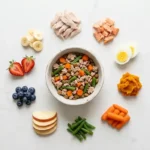
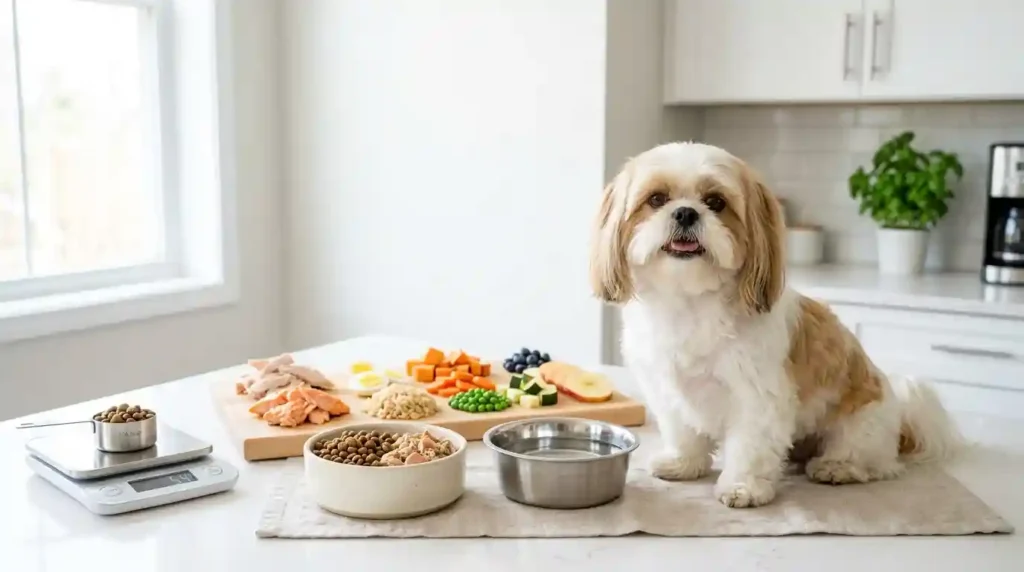
If you are wondering what to feed a Shih Tzu, choose a complete and balanced dog food made for small dogs and the correct life stage. The ideal Shih Tzu diet contains high-quality animal protein, healthy fats, digestible carbohydrates, fiber, vitamins, and minerals. Puppies usually need three or four small meals, while healthy adults normally eat two measured meals daily. Since Shih Tzus can gain weight easily and may develop dental, skin, stomach, or breathing problems, portion control is just as important as food quality.
This guide explains what Shih Tzus eat, how much food they need each day, which human foods are safe, and how to select food for a puppy, adult, or senior. It also covers dry kibble, wet food, fresh meals, raw food, home-cooked diets, treats, allergies, picky eating, and useful feeding products.
Table of Contents
- What to Feed a Shih Tzu for Complete Nutrition
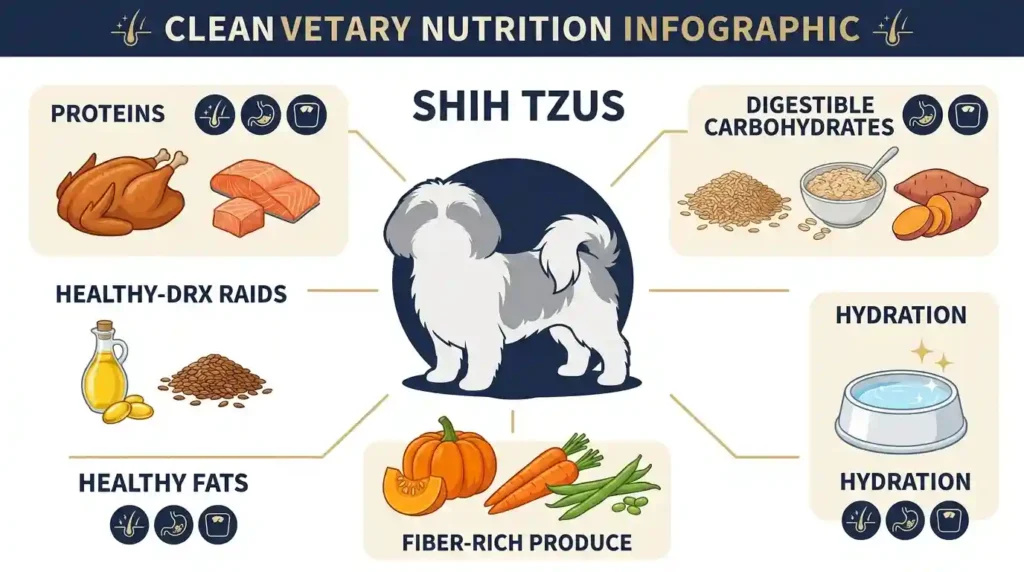
- The Most Important Nutrients in a Shih Tzu Diet
- What to Feed a Shih Tzu at Each Life Stage
- How Much Should a Shih Tzu Eat?
- How Many Times a Day Should a Shih Tzu Eat?
- Choosing Between Dry, Wet, Fresh, Raw, and Homemade Food
- What Can Shih Tzus Eat as Human Food?
- Foods Shih Tzus Should Never Eat
- Sensitive Stomachs, Allergies, and Picky Eating
- Shih Tzu Health Concerns That Affect Feeding
- How to Read a Dog-Food Label
- Conclusion
- Frequently Asked Questions
What to Feed a Shih Tzu for Complete Nutrition
The best food for a Shih Tzu is a complete and balanced formula that matches the dog’s age, body weight, activity level, and medical needs. A Shih Tzu puppy needs food formulated for growth, an adult requires maintenance nutrition, and a senior may benefit from controlled calories and extra support for joints and healthy aging.
Shih Tzus belong to the toy group and are considered a small dog breed. They have a small mouth, small stomach, and compact body. These features make a nutrient-dense small-breed formula easier to feed than large pieces of low-calorie food.
Owners can explore other Dog Breed Feeding articles to understand why every breed needs an individual approach. A food portion suitable for a large working dog could provide far too many calories for a Shih Tzu.
Start with complete and balanced dog food
Look for a nutritional adequacy statement confirming that the food is complete and balanced for growth, adult maintenance, or all life stages. According to the Association of American Feed Control Officials, “complete” means a food contains the required nutrients, while “balanced” means those nutrients are provided in suitable proportions.
A suitable commercial dog food should include:
- High-quality animal protein
- Essential amino acids
- Moderate amounts of healthy fat
- Digestible carbohydrates
- Dietary or prebiotic fiber
- Vitamins and minerals
- Fresh, clean water alongside every diet
- A calorie level that matches the dog’s needs
A breed-specific formula can be convenient, but the Shih Tzu picture on the package does not automatically make it the best choice. The nutritional adequacy, calorie content, digestibility, manufacturing quality, and your dog’s response matter more.
Why small-breed food can help
Small-breed dog food usually provides more calories in a smaller volume. This is helpful because Shih Tzus have small stomachs and may not comfortably eat large meals.
Small-bite food also has a kibble shape and texture designed for a small mouth. Some breed-specific products make the pieces easier for a brachycephalic jaw to pick up and chew.
The same portion principles apply to other toy breeds, although their calorie needs still differ. Owners can compare What Do Chihuahuas Eat and What Do Pomeranians Eat for more examples of small-dog nutrition.
The Most Important Nutrients in a Shih Tzu Diet
A good diet is not based on one “superfood.” It depends on the balance between protein, fat, carbohydrates, fiber, vitamins, minerals, and water.
High-quality animal protein
Protein provides essential amino acids for muscle development, tissue repair, immune support, energy production, and normal body functions. Puppies require highly digestible protein for steady growth, while adults and seniors need enough protein to maintain healthy muscle.
Useful protein sources include:
- Chicken
- Turkey
- Lamb
- Beef
- Fish
- Salmon
- Eggs
- Properly prepared organ meat
A named animal protein gives the owner more information than vague terms such as “animal meat.” Muscle meat provides valuable protein, while organ meat can supply vitamins and minerals. Both must be included in the correct balance.
Meat meals and named by-products are not automatically poor ingredients. Some are concentrated sources of protein and minerals. The greater concern is unclear labeling, unknown animal sources, or a finished food that is not nutritionally complete.
Histidine is one of the essential amino acids dogs receive from dietary protein. Puppies need a growth formula with suitable levels of protein and amino acids rather than adult food that was designed only for maintenance.
Healthy fats for skin, coat, and energy
Healthy fats supply energy and help the body absorb certain vitamins. They also support the Shih Tzu’s long coat and skin barrier.
Common fat sources include:
- Chicken fat
- Fish oil
- Salmon oil
- Flaxseed
- Vegetable oil
- Safflower oil
Omega-3 fatty acids, including EPA and DHA, can support skin health, brain development, vision development, joints, and normal inflammatory responses. Omega-6 fatty acids and biotin also help maintain the coat and skin.
A puppy formula often contains DHA because it supports the developing brain and eyes. Senior food may include fish oil to support joints and cognitive health.
More fat is not always better. Fatty meat, excessive oil, and rich table scraps add many calories and may cause digestive upset. They can also be unsuitable for a dog with pancreatitis or another condition that requires controlled dietary fat.
Complex carbohydrates and whole grains
Dogs can digest properly prepared carbohydrates. Brown rice, brewers rice, oats, barley, and sweet potato can supply energy, fiber, vitamins, and minerals.
Corn, soy, or wheat gluten should not automatically be called useless fillers. These ingredients can serve nutritional purposes when used correctly. A diagnosed food allergy or intolerance is a valid reason to avoid an ingredient, but marketing language alone is not.
A grain-free formula is not automatically healthier. Unless your veterinarian has identified a medical reason to avoid grains, choose food according to its complete nutritional profile rather than the words “grain-free” on the front.
Dietary fiber and prebiotics
Dietary fiber supports normal digestion and stool quality. Suitable sources may include beet pulp, carrots, peas, zucchini, oats, and other plant ingredients.
Prebiotic fiber feeds helpful intestinal bacteria. Some products contain fructooligosaccharides, which are prebiotic compounds used to support gut health.
Too much fiber can cause gas, increase stool volume, or reduce the absorption of some nutrients. A precise fiber level is more useful than simply choosing the product with the highest percentage.
Vitamins, minerals, and supporting nutrients
Complete dog food should provide vitamins and minerals in carefully controlled amounts. Important nutrients include:
- Calcium
- Phosphorus
- Zinc
- Vitamin A
- Vitamin C
- Vitamin D3
- Vitamin E
- B vitamins
- Taurine
- Biotin
- Antioxidants
Calcium and phosphorus are especially important during puppy growth. A safe calcium-to-phosphorus balance supports bones and teeth. Adding calcium powder to an already complete puppy food can upset this balance.
Some diets also provide glucosamine and chondroitin for joint support or L-carnitine to support normal fat metabolism. These ingredients can be useful, but they do not replace calorie control, exercise, or veterinary treatment.
Do not add vitamins, minerals, fish oil, or other supplements without a clear reason. A properly balanced commercial diet usually provides the required nutrients.
What to Feed a Shih Tzu at Each Life Stage
Nutritional needs change as a Shih Tzu grows. Food that supports a young puppy may provide too many calories for a quiet senior, while adult maintenance food may not provide everything a growing puppy requires.
What can Shih Tzu puppies eat?
A Shih Tzu puppy should eat small-breed puppy food formulated for growth or all life stages. The food should be nutrient-dense, calorie-dense, highly digestible, and easy for a small mouth to manage.
A suitable puppy diet supports:
- Steady growth
- Muscle development
- Bone development
- Brain and vision development
- Immune-system development
- Healthy digestion
- Skin and coat health
Young puppies have small stomachs but need plenty of energy for growth. Divide their daily amount into three or four small meals rather than one or two large portions.
Toy-breed puppies may be at risk of hypoglycemia, or low blood sugar, when they go too long without food. Warning signs include weakness, trembling, confusion, poor balance, unusual sleepiness, seizures, or collapse. Treat these signs as an emergency and contact a veterinarian immediately.
At around nine to twelve months, many Shih Tzus can gradually move from puppy food to adult dog food. The correct time depends on growth, body condition, and your veterinarian’s advice.
The feeding needs of other small dogs are compared in What Do Maltese Dogs Eat. Although Maltese and Shih Tzus are similar in size, individual metabolism and calorie needs can still differ.
What should an adult Shih Tzu eat?
An adult Shih Tzu usually does well on complete adult dog food made for small or toy breeds. Choose a formula with high-quality protein, moderate fat, controlled calories, digestible carbohydrates, and nutrients that support skin and coat health.
Most adults should eat two measured meals each day. Free feeding can make calorie control difficult, especially for a dog that eats whenever food is available.
One breed-focused option is Royal Canin Shih Tzu Adult Dry Dog Food. Its kibble is designed for a short muzzle and underbite, and the formula includes EPA, DHA, vitamin A, biotin, and digestible protein. When checked, the listing showed a 4.7-star rating from more than 6,000 reviews. It is only one option—not a universal recommendation—and may not suit every dog’s allergies, digestion, calorie needs, or budget.
Amazon ratings, sellers, formulas, and availability can change. Confirm the current label and consult your veterinarian before choosing a long-term diet. If your website uses affiliate links, publish a clear affiliate disclosure.
What should a senior Shih Tzu eat?
A senior Shih Tzu may require fewer calories because activity and metabolism can decrease with age. However, older dogs still need highly digestible protein to protect muscle mass.
Senior dog food may include:
- Controlled calories
- High-quality protein
- Omega-3 fatty acids
- Antioxidants
- Glucosamine
- Chondroitin
- Easy-to-chew kibble
- Added moisture
Wet food or softened dry kibble can help a dog with dental pain, missing teeth, or a reduced appetite. Do not assume appetite loss is a normal part of aging. Dental disease, kidney disease, digestive illness, pain, or another condition may be responsible.
Large breeds age and eat differently. The guidance in What Golden Retrievers Eat should not be used to calculate a Shih Tzu’s daily portion.
How Much Should a Shih Tzu Eat?
There is no single cup measurement for every dog. How much food a Shih Tzu should eat depends on:
- Ideal body weight
- Age
- Activity level
- Metabolism
- Neuter status
- Health conditions
- Daily treat intake
- Calorie content of the food
The feeding chart printed on the package provides a starting point. It does not know whether your dog is highly active, inactive, underweight, overweight, or receiving many snacks.
Approximate adult calorie guide
The following amounts are broad starting estimates for healthy adult dogs. Ask your veterinarian for a personal target.
| Ideal weight | Approximate daily calories | Normal meal frequency |
| 6 pounds | 180–250 calories | Two meals |
| 9 pounds | 240–330 calories | Two meals |
| 12 pounds | 300–400 calories | Two meals |
| 16 pounds | 370–500 calories | Two meals |
A quiet or older dog may need the lower end of the range. A young, active adult may require more. Illness, pregnancy, nursing, recovery, and prescription diets need an individual plan.
Do not calculate weight-loss portions from an overweight dog’s current weight without professional advice. Use the target or ideal body weight recommended by your veterinarian.
How to convert calories into cups
Check the food label for calories per cup. Then use this calculation:
Daily calorie target ÷ calories per cup = cups per day
If your Shih Tzu needs 320 calories and the food contains 400 calories per cup:
320 ÷ 400 = 0.8 cup per day
Divide the result into two meals. This dog would receive about 0.4 cup at breakfast and 0.4 cup at dinner before any adjustment for treats.
A digital scale gives more consistent portions than a random scoop. The NUTRI FIT Digital Food Scale measures in grams and ounces and includes a tare function for removing the bowl’s weight. When checked, it had a 4.5-star rating from more than 2,800 reviews. Use the gram-based feeding information from the manufacturer whenever it is available.
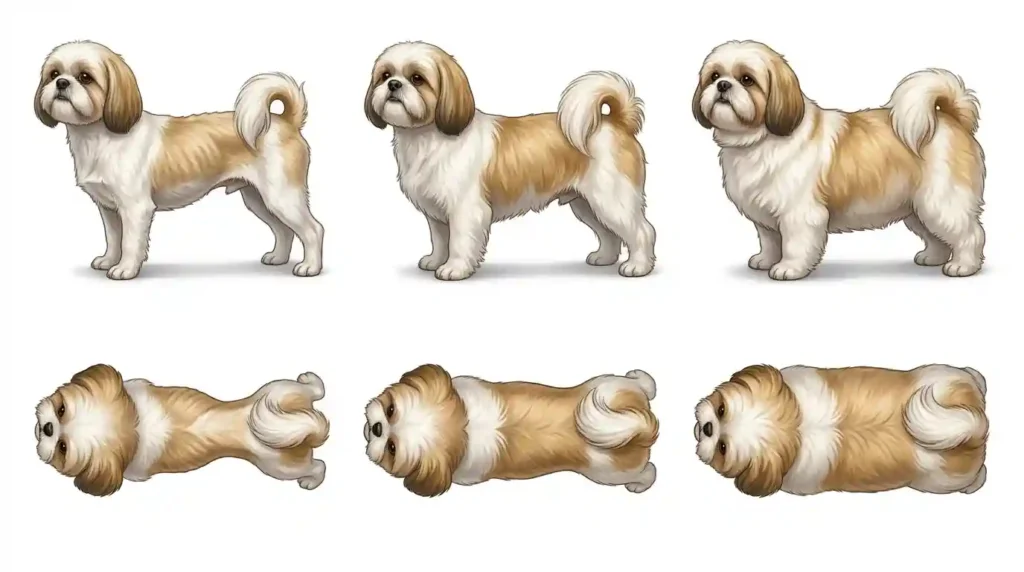
Monitor body condition
Look at your dog from the top and side. You should be able to feel the ribs beneath a light covering of fat. There should be a visible waist behind the ribs and a gentle upward abdominal tuck.
Your Shih Tzu may need less food if:
- The ribs are difficult to feel
- The waist has disappeared
- Body weight is increasing
- The stomach hangs lower
- Normal walking causes greater breathing difficulty
The portion may be too small if the ribs, spine, or hip bones become highly visible and the dog is losing weight or energy.
Check body weight every two to four weeks after adjusting food. Long-backed dogs also need careful weight control, as explained in What Do Dachshunds Eat.
How Many Times a Day Should a Shih Tzu Eat?
Meal frequency depends mainly on age.
| Life stage | Meals each day | Feeding approach |
| Eight to twelve weeks | 4 | Small, frequent meals |
| Three to six months | 3–4 | Evenly spaced puppy meals |
| Six to twelve months | 2–3 | Gradually move toward adult timing |
| Healthy adult | 2 | Morning and evening meals |
| Senior | 2–3 | Adjust for appetite and digestion |
A regular feeding schedule supports digestion, makes toilet timing more predictable, and helps owners notice appetite changes.
Avoid leaving unlimited food in the bowl unless a veterinarian recommends it for a very young puppy or a specific medical reason. Most adult Shih Tzus benefit from measured meals.
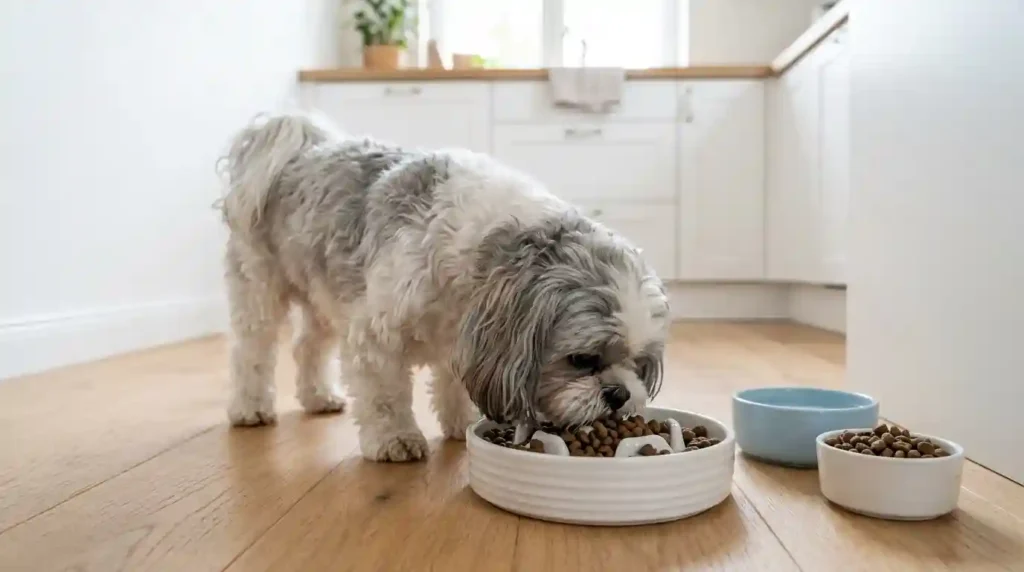
Helping a fast eater
Some Shih Tzus swallow food quickly. Fast eating can increase swallowed air, gas, regurgitation, and choking risk.
A shallow slow-feeder bowl can extend mealtime. The small Outward Hound Fun Feeder Slo Bowl holds about three-quarters of a cup and is designed for small dogs and puppies. Its Amazon listing showed a 4.6-star rating backed by more than 135,000 reviews when checked.
Choose a simple pattern that your Shih Tzu can reach with its short muzzle. Stop using any bowl that causes frustration, facial rubbing, coughing, or breathing difficulty.
Choosing Between Dry, Wet, Fresh, Raw, and Homemade Food
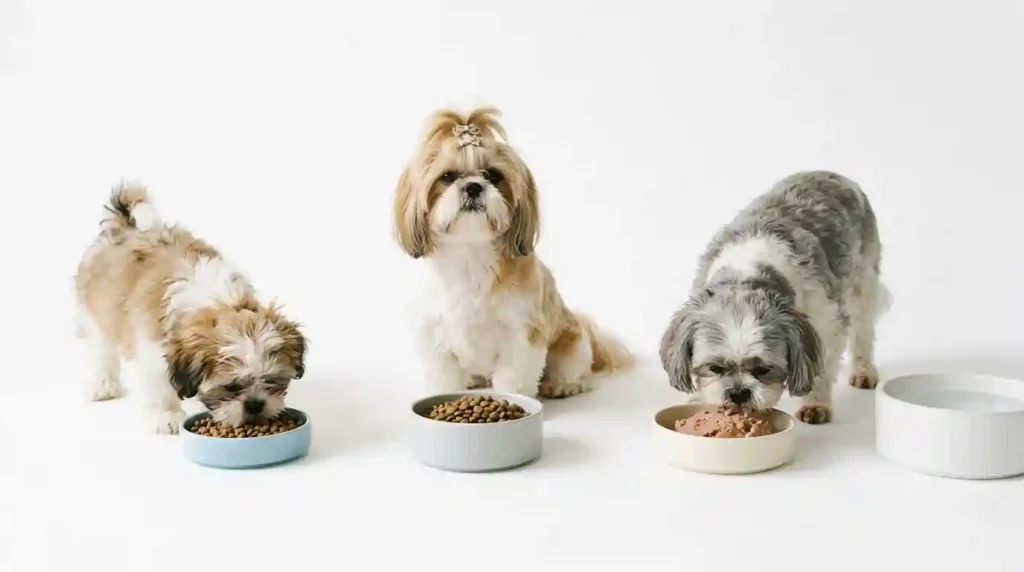
Dry kibble
Dry kibble is convenient, easy to store, and simple to measure. Small-sized kibble can be easier for a Shih Tzu’s small mouth and brachycephalic jaw.
Regular kibble does not replace tooth brushing. Although some dry pieces may produce mild scraping, a dental-specific diet is designed differently and may provide better plaque or tartar support.
Wet dog food
Wet dog food provides more moisture, which can support hydration. It may also be easier for puppies, senior dogs, picky eaters, or dogs with dental pain.
Check whether the food is complete and balanced. Some canned products are toppers intended only for occasional or supplemental feeding.
Mixed feeding
Mixed feeding combines dry and wet food. It can provide the convenience of kibble with the moisture and taste of canned food.
Do not provide the complete recommended portion of both foods. Calculate the calories from each part and keep the combined meal within the daily calorie target.
Fresh food
Commercial fresh food can be suitable if it is complete, balanced, safely prepared, and formulated for the correct life stage. “Fresh” and “human-grade” are marketing terms, not proof of nutritional completeness.
Follow refrigeration and storage directions. Discard spoiled food and wash bowls after every moist meal.
Raw food diet
A raw food diet may contain muscle meat, organ meat, bone, vegetables, oil, and supplements. Meat alone is not a complete raw diet.
Raw food can expose pets and household members to harmful bacteria. Bones can cause choking, broken teeth, digestive blockage, or internal injury. Families with young children, older adults, pregnant people, or people with weak immune systems should be especially careful.
Some European raw foods follow FEDIAF standards. In the United States, look for an AAFCO nutritional adequacy statement. Consult a veterinarian or qualified canine nutritionist before starting raw feeding.
Home-cooked diet
A home-cooked diet may contain chicken, turkey, fish, brown rice, oats, sweet potato, carrots, peas, zucchini, and a carefully designed supplement mix.
A random combination of meat, rice, and vegetables is not complete. It can lack calcium, phosphorus, essential fatty acids, zinc, vitamin D, and other nutrients. Ask a board-certified veterinary nutritionist to create the recipe, particularly for puppies or dogs with health conditions.
For broader comparisons between commercial and home feeding, visit the Dog Food guide.
What Can Shih Tzus Eat as Human Food?
Shih Tzus can eat small portions of several plain human foods. These should be occasional treats, not replacements for complete dog food.
Safe cooked proteins
Suitable options include:
- Boneless chicken
- Turkey
- Lean beef
- Cooked salmon
- Whitefish
- Fully cooked eggs
Remove bones, skin, seasoning, sauces, and excess fat. Check fish carefully for small bones.
Safe vegetables
Small pieces of the following vegetables are usually suitable:
- Carrots
- Green beans
- Peas
- Zucchini
- Pumpkin
- Sweet potato
- Broccoli
Serve vegetables plain. Hard pieces should be cut small or softened to reduce choking risk.
Safe fruits
Shih Tzus can enjoy small amounts of:
- Apple without seeds or core
- Blueberries
- Strawberries
- Banana
- Seedless watermelon
- Pear without seeds
Fruit contains natural sugar, so do not offer large portions. Treats should generally provide no more than 10% of daily calories—the 90/10 rule—while complete food provides the remaining 90%.
The safe size of a treat varies by breed. Guidance about What Do Beagles Eat shows why food-loving dogs can gain weight quickly when snacks are not measured.
Foods Shih Tzus Should Never Eat
Never give your Shih Tzu:
- Chocolate
- Xylitol or birch sugar
- Grapes or raisins
- Onion, garlic, chives, or leeks
- Macadamia nuts
- Alcohol
- Caffeine
- Raw yeast dough
- Moldy or spoiled food
- Cooked bones
- Very salty food
- Large amounts of fatty food
Chocolate contains theobromine and caffeine. Xylitol can cause severe hypoglycemia and liver damage. Grapes and raisins may cause kidney failure, while onion-family plants can damage red blood cells.
Contact a veterinarian or animal poison service immediately if your Shih Tzu eats a toxic food. Do not wait for symptoms and do not induce vomiting unless a professional instructs you.
Sensitive Stomachs, Allergies, and Picky Eating
Do Shih Tzus have sensitive stomachs?
Some Shih Tzus experience gas, vomiting, diarrhea, poor stool quality, or other gastrointestinal issues. Possible causes include rapid food changes, excessive treats, overfeeding, food intolerance, parasites, pancreatitis, infection, or another illness.
A highly digestible sensitive stomach food may contain moderate fat, digestible protein, precise fiber, and prebiotics. Do not keep changing food every few days because repeated changes can make digestion worse.
Food allergy versus intolerance
A food allergy involves an immune response. Signs may include itchy skin, skin irritation, ear trouble, vomiting, or diarrhea. Food intolerance can produce digestive symptoms without the same immune reaction.
A veterinarian may recommend a strict elimination diet using a novel or hydrolyzed protein. Guessing the trigger by repeatedly changing brands is unreliable.
Are Shih Tzus picky eaters?
Some Shih Tzus are naturally selective, but picky eating can also become learned behavior. If refusing kibble leads to chicken, cheese, or a richer meal, the dog may learn to wait for the preferred option.
Offer measured food at regular times and remove the bowl after a reasonable period. Avoid constantly changing flavors or adding more table scraps.
Understanding Dog psychology can help owners distinguish true appetite loss from learned food refusal. The guide on What Do Poodles Eat also explains feeding strategies for selective dogs.
Sudden appetite loss is different from normal pickiness. Dental pain, nausea, kidney disease, infection, or another medical condition may be responsible.
Make food changes gradually
Unless your veterinarian advises otherwise, transition over seven to ten days:
- Days 1–2: 75% old food and 25% new food
- Days 3–4: 50% old food and 50% new food
- Days 5–6: 25% old food and 75% new food
- Day 7 onward: 100% new food
Extend the transition for a sensitive stomach. Seek veterinary help for repeated vomiting, severe diarrhea, blood in the stool, facial swelling, breathing difficulty, weakness, or dehydration.
Shih Tzu Health Concerns That Affect Feeding
Obesity and weight gain
Shih Tzus are prone to weight gain. Their small bodies need fewer calories than many owners expect, and several tiny treats can represent a large part of the day’s food.
Obesity can worsen breathing difficulty and place extra strain on the joints. Use measured meals, limit fatty treats, and adjust food according to body condition rather than begging.
Do not copy the portions used for larger dogs. The calorie needs described in best dog food for labradors and Dog Food for Pitbulls are very different from those of a toy breed.
Brachycephalic jaw and breathing difficulty
The Shih Tzu is a brachycephalic breed with a short face and compact jaw. Some dogs find certain kibble shapes difficult to grasp. Large or awkward pieces may fall from the mouth or encourage fast swallowing.
Use a shallow, stable bowl and easy-to-pick-up kibble. Keep your dog at a healthy weight because excess fat can make breathing problems worse.
Owners of flat-faced dogs can compare these concerns with What English Bulldogs Eat and What Do Pugs Eat.
Skin and long-coat health
Nutrition supports the skin barrier and long coat. Protein, omega-3 fatty acids, omega-6 fatty acids, zinc, biotin, vitamin A, and vitamin E all play useful roles.
A dull coat or itchy skin does not always mean the food lacks oil. Parasites, environmental allergies, infection, grooming products, and food allergy are also possible causes.
Adding salmon oil without measuring it can increase daily calories and cause diarrhea. Ask your veterinarian for a suitable amount.
Periodontal disease
Shih Tzus have small mouths and crowded teeth, which can increase the risk of plaque buildup, tartar formation, gum inflammation, and periodontal disease.
Brush the teeth using dog-safe toothpaste. Dental chews or veterinary dental diets may provide extra support, but they do not replace brushing and professional examinations.
Greenies Original Teenie Dental Treats are made for dogs weighing 5–15 pounds and may suit many adult Shih Tzus. Confirm the current weight range, supervise chewing, follow the package directions, and count each chew toward the daily calorie limit. Ask your veterinarian whether dental chews are safe for your particular dog.
Dental-specific formulas may use kibble texture, calcium chelators, or ingredients such as sodium tripolyphosphate to help control tartar. These features are different from ordinary dry food.
Joint support
Extra weight can place strain on a Shih Tzu’s knees and other joints. Controlled calories are more important than relying only on glucosamine or chondroitin.
Larger working breeds face different joint and growth concerns. See Dog Food for German Shepherds and Dog Food for Dobermans for breed-specific comparisons.
How to Read a Dog-Food Label
Check the nutritional adequacy statement
The label should state whether the food meets AAFCO nutrient guidelines for growth, adult maintenance, or all life stages. Food labeled for intermittent or supplemental feeding should not be used as the only daily meal.
Review the calorie content
Find the metabolizable energy listed as calories per cup, can, tray, or kilogram. Calorie density determines how large the portion should be.
A rich food may require a much smaller serving than a lower-calorie formula. Measuring cups alone are not useful unless you know the calories in each cup.
Read the ingredient list carefully
Ingredients are listed by weight before processing. Named proteins improve transparency, but the first ingredient does not reveal the complete quality of the finished product.
Brewer’s rice, brown rice, oats, barley, beet pulp, corn, soy, cellulose, and wheat gluten can serve different nutritional or manufacturing purposes. Evaluate the complete formula instead of judging it from one ingredient.
Artificial additives, colors, and flavors do not automatically make food dangerous, but unnecessary coloring offers no nutritional benefit to the dog. Manufacturer expertise, feeding research, safety controls, digestibility, and nutritional adequacy deserve more attention.
Follow the feeding guide, then adjust
Start with the manufacturer’s recommendation and monitor weight, body condition, appetite, stool, coat, and energy level. Adjust the portion gradually.
Active breeds can require far more calories. The portions discussed in Dog Food for Huskies would be unsuitable for most Shih Tzus, even if both dogs enjoy similar ingredients.
Conclusion
Knowing what to feed a Shih Tzu begins with a complete and balanced life-stage formula. Choose food with high-quality protein, healthy fats, digestible carbohydrates, useful fiber, vitamins, and minerals. Puppies normally need three or four small meals, while healthy adults usually need two measured meals each day.
Calculate portions from the food’s calorie content rather than relying on a general cup amount. Include treats in the daily total, monitor body condition, and provide fresh water at all times.
Dry kibble, wet food, mixed feeding, fresh food, raw food, and home-cooked diets can all look very different. The important question is whether the full diet is nutritionally complete, safe, suitable for the dog’s life stage, and fed in the correct amount.
Because Shih Tzus may experience obesity, hypoglycemia, picky eating, sensitive digestion, skin problems, breathing difficulty, and dental disease, involve your veterinarian when choosing food or addressing ongoing symptoms.
Frequently Asked Questions
What do Shih Tzus eat?
Shih Tzus should eat complete and balanced small-breed dog food suitable for their age, weight, activity, and health.
What is the best food for a Shih Tzu?
The best food provides suitable protein, fat, fiber, vitamins, minerals, and calories while meeting AAFCO guidelines for the correct life stage.
How much should a Shih Tzu eat a day?
A healthy adult may need approximately 180–500 calories daily, depending on ideal weight and activity. Ask your veterinarian for an individual target.
How many times a day should a Shih Tzu eat?
Most adults eat twice daily. Puppies usually require three or four small meals to support growth and stable blood sugar.
What can Shih Tzu puppies eat?
Puppies should eat complete small-breed puppy food formulated for growth or all life stages. Human food should remain an occasional treat.
Can Shih Tzus eat chicken?
Yes, most can eat plain, fully cooked, boneless chicken. Avoid seasoning, skin, cooked bones, and chicken if an allergy has been diagnosed.
Can Shih Tzus eat rice?
Yes, properly cooked rice can be included in a balanced diet. Rice alone is not a complete meal.
Can Shih Tzus eat eggs?
Yes, fully cooked, unseasoned eggs can be offered in small portions. Include their calories in the daily allowance.
Can Shih Tzus eat fruit?
Yes, small amounts of apple without seeds, blueberries, strawberries, banana, or seedless watermelon can be used as treats.
Is dry or wet food better for a Shih Tzu?
Both can be suitable when complete and balanced. Dry food is convenient, while wet food adds moisture and may be easier to chew.
Are Shih Tzus picky eaters?
Some are selective, but frequent food changes and table scraps can teach picky behavior. Sudden appetite loss requires veterinary attention.
Do Shih Tzus need grain-free food?
Usually not. Grain-free food should be chosen for a clear nutritional or medical reason rather than as an automatic upgrade.
Can Shih Tzus eat home-cooked food every day?
Yes, but the recipe should be created by a qualified veterinary nutritionist. Meat, rice, and vegetables alone are not nutritionally complete.
Why does my Shih Tzu have gas after eating?
Rapid eating, a sudden food change, overfeeding, intolerance, or digestive illness may cause gas. Persistent symptoms should be checked by a veterinarian.
How much should I feed my senior Shih Tzu?
Feed according to ideal weight, activity, medical needs, and the food’s calories. Seniors often need controlled calories but still require quality protein.